

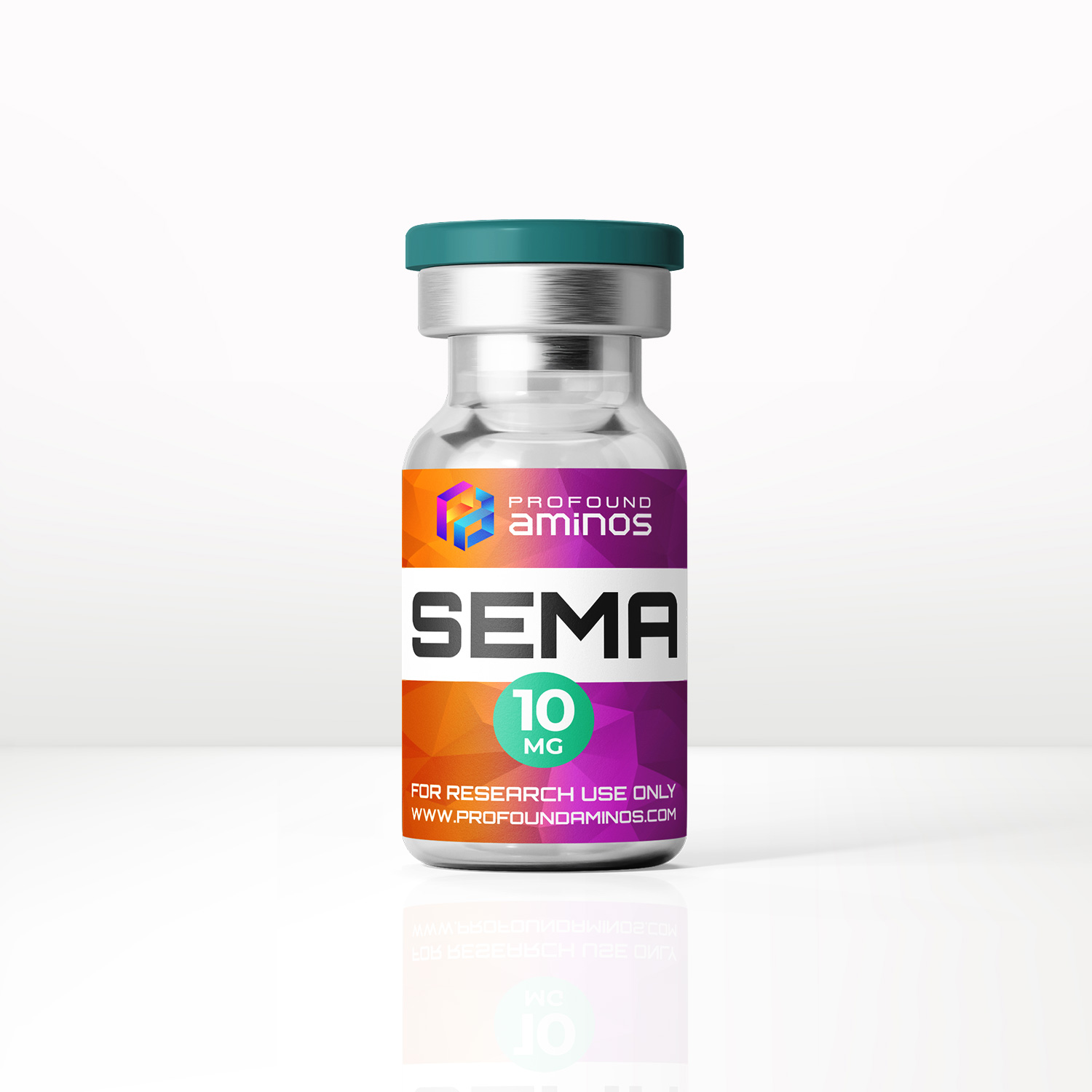

Sema

Price range: $87.00 through $153.00
🔥 Exclusive Crypto Offer
Get an INSTANT 15% DISCOUNT when you pay with Bitcoin, Ethereum, Dogecoin, Bitcoin Cash, XRP, Solana, or USDT.
⚡ Don't have crypto? Buy it here in 5 minutes with easy guidance.
💡 Pro Tip: You can also pay with cryptocurrency using your verified Cash App or PayPal account for a fast and secure checkout!
Sema (GLP-1 Receptor Agonist)
Research and Regulatory Scientific Reference | PubChem CID 56843331
C187H291N45O59 | MW 4113.58 g/mol | GLP-1R Peptidomimetic Agonist DPP-4 Resistant | Albumin-Binding Modified Peptide | FDA-Approved Prescription Drug NDA 209637 (Ozempic) | NDA 213051 (Rybelsus) | NDA 215256 (Wegovy)
REGULATORY STATUS : READ BEFORE PROCEEDING Semaglutide is an FDA-approved prescription drug (NDA 209637, NDA 213051, NDA 215256) marketed as Ozempic, Rybelsus, and Wegovy by Novo Nordisk. It is NOT a research-use-only (RUO) compound. This document is a scientific reference resource providing registry-anchored pharmacological and regulatory information for educational, academic, and pharmaceutical research professional use only. This document does not constitute a product listing, does not represent an offer to supply semaglutide, and must not be construed as guidance for therapeutic, compounding, or clinical use. FDA declared the semaglutide shortage resolved on 21 February 2025 and has since intensified enforcement against compounders, telehealth platforms, and marketers of unapproved semaglutide products. Compounded or “research” semaglutide products are treated as high-risk and non-substitutes for approved medicines under 2025-2026 FDA policy. Consult a licensed healthcare provider and FDA.gov for approved use information.
PRODUCT OVERVIEW
Semaglutide is a long-acting, chemically modified glucagon-like peptide-1 (GLP-1) receptor agonist, classified as a GLP-1 receptor peptidomimetic agonist derived from human GLP-1 (7–37). Its peptide backbone, produced by yeast (Saccharomyces cerevisiae) fermentation and subsequently chemically modified, is 94% homologous to native human GLP-1.
Three deliberate medicinal-chemistry edits define semaglutide’s pharmacological character: α-aminobutyric acid (Aib) substitution at position 8 confers resistance to dipeptidyl peptidase-4 (DPP-4) enzymatic cleavage at the Ala8-Glu9 scissile bond; arginine substitution at position 34 replaces Lys34 to prevent unwanted off-site acylation and ensure single-site conjugation chemistry at Lys26; and Lys26 acylation via a hydrophilic spacer to a C18 stearic diacid fatty chain promotes strong, reversible, non-covalent albumin binding (greater than 99% bound in circulation), dramatically reducing renal filtration rate and proteolytic access to extend plasma half-life from approximately 2 minutes (native GLP-1) to approximately one week, enabling once-weekly subcutaneous dosing and — when co-formulated with the absorption enhancer SNAC (sodium N-[8-(2-hydroxybenzoyl)amino]caprylate) — once-daily oral administration.
Its approved molecular formula is C187H291N45O59, molecular weight 4113.58 g/mol, registry-anchored at PubChem Compound ID (CID) 56843331 with cross-referenced substance records SID 135267256 (Semaglutide [USAN:INN], ChemIDplus), SID 354702201 (IUPHAR/BPS Guide to Pharmacology, Ligand ID 9724), and SID 341186755 (Springer Nature). Within the pharmacological class of GLP-1 receptor agonists — alongside exenatide, liraglutide, dulaglutide, tirzepatide, and newer agents — semaglutide’s extended acyl chain and specific backbone substitutions confer unusually high receptor potency and prolonged circulating exposure, distinguishing it within this class and contributing to the breadth of its clinical evidence base across glycemic, cardiovascular, renal, hepatic, and body-composition endpoints.
Semaglutide is an FDA-approved prescription drug commercialised in multiple presentations: Ozempic (NDA 209637, subcutaneous and tablet), Rybelsus (NDA 213051, oral tablet), Wegovy (NDA 215256, subcutaneous and tablet, including Wegovy HD 7.2 mg approved March 2026). It is no longer a single-product opportunity but a platform franchise spanning metabolic, cardiovascular, renal, and liver indications. The IUPHAR/BPS Guide to Pharmacology and KEGG classify semaglutide within antidiabetic and anti-obesity drug pathways, mapping its actions onto incretin and energy-homeostasis modules. These cross-references reinforce that semaglutide is a well-characterised pharmaceutical agent rather than a generic “research peptide.”
This document is a scientific reference resource for pharmaceutical research professionals, academic investigators, regulatory affairs specialists, and compliant content creators seeking registry-anchored molecular, pharmacological, and regulatory information about semaglutide in the context of the 2026 U.S. GLP-1 research and market landscape. It is not a product page, a clinical protocol, a compounding guide, or a consumer dosing reference.
SEMAGLUTIDE CHEMICAL IDENTITY – REGISTRY AND STRUCTURAL REFERENCE
PubChem CID 56843331 — Authoritative Identity Anchor
PubChem CID 56843331 is the primary compound-level registry record for semaglutide, maintained by the National Library of Medicine and updated continuously. This record consolidates structural data, synonyms, CAS numbers, pharmacological annotations, canonical SMILES, InChI identifiers, computed physicochemical descriptors, and links to FDA drug labels across multiple submitter substance records.
The PubChem-linked/GtoPdb view confirms the presence of canonical SMILES and InChI identifiers, but the fetched interface truncates those very long strings — reproducing a partial identifier would be misleading, so the authoritative PubChem record at https://pubchem.ncbi.nlm.nih.gov/compound/56843331 should be treated as the source of truth for complete machine-readable strings. Additional PubChem records include Sermaglutide CID 139600673 and CID 122189768, both sharing the C187H291N45O59 molecular formula.
| Identifier | Detail | Registry / Source |
|---|---|---|
| PubChem CID | 56843331 | pubchem.ncbi.nlm.nih.gov/compound/56843331 |
| PubChem Substance SIDs | SID 135267256 (USAN:INN, ChemIDplus) | SID 354702201 (IUPHAR/BPS Guide to Pharmacology) | SID 341186755 (Springer Nature) | PubChem Substance database |
| Additional PubChem CIDs | CID 139600673 (Sermaglutide) | CID 122189768 — both C187H291N45O59 | PubChem Compound database |
| IUPHAR/BPS Ligand ID | 9724 — Selective GLP-1 receptor agonist | guidetopharmacology.org |
| Molecular Formula | C187H291N45O59 | FDA Ozempic/Wegovy/Rybelsus prescribing information |
| Molecular Weight | 4113.58 g/mol (FDA labels) | ~4114 g/mol (PubChem computed) | FDA NDA labels; PubChem |
| CAS Number | 910463-68-2 | ChemIDplus / PubChem |
| USAN / INN | Semaglutide | USAN Council / WHO INN |
| Structural Class | GLP-1 receptor peptidomimetic agonist | Modified human GLP-1 (7-37) analogue | FDA label / IUPHAR/BPS / KEGG |
| Backbone Origin | Human GLP-1(7–37) with Aib at position 8 (DPP-4 resistance), Arg at position 34 (single-site acylation control), Lys26 C18 stearic diacid fatty chain acylation via hydrophilic spacer (albumin binding) | Lau et al., J Med Chem 2015 (DOI: 10.1021/acs.jmedchem.5b00726); FDA prescribing information |
| Homology to Native GLP-1 | 94% sequence homology | FDA Ozempic/Wegovy label |
| Backbone Production | Yeast (Saccharomyces cerevisiae) fermentation + chemical modification; alternative routes: Fmoc SPPS, fragmentation approaches, side-chain acylation strategies | FDA prescribing information; patent literature |
| FDA Approval Status (May 2026) | Approved — NDA 209637 (Ozempic injection + tablet), NDA 213051 (Rybelsus + Ozempic tablet), NDA 215256 (Wegovy injection + tablet, Wegovy HD 7.2 mg) | FDA.gov / Orange Book |
| Orange Book Patent Position | Core composition: US 8,129,343 — expires 5 December 2031 (Wegovy). Oral tablet (NDA 213051): US 12,514,822 (2034), US 12,594,326 (2033). Injectable: US 12,569,543 (2037). Device/HD: 2038–2041. | FDA Orange Book April 2026 Cumulative Supplement |
| FTC Patent Challenge | April 2024: FTC challenged multiple Novo Nordisk Orange Book listings as potentially improper or inaccurate | FTC press release April 2024 |
| NDA Regulatory Pathway | Drug under FDA/CDER NDA (NOT biologic in Purple Book). IND required. 505(b)(1) for novel product; 505(b)(2) for differentiated. ANDA unclear — semaglutide NOT named in FDA 2021 peptide-ANDA guidance. | FDA Orange Book; FDA peptide-ANDA guidance 2021 |
| Pharmacological Class | GLP-1 receptor agonist (incretin mimetic) | KEGG: antidiabetic and anti-obesity drug pathways, incretin and energy-homeostasis modules | FDA / IUPHAR/BPS / KEGG |
| QTc Effect | Does NOT prolong QTc at tested doses | FDA Ozempic label |
THE THREE-MODIFICATION DESIGN — WHY SEMAGLUTIDE BEHAVES AS IT DOES
Structural Engineering and Pharmacological Consequence
Native human GLP-1 (7-37) has a plasma half-life of approximately 2 minutes due to rapid DPP-4-mediated N-terminal cleavage at the Ala8-Glu9 scissile bond and rapid renal/hepatic clearance. Semaglutide’s three deliberate medicinal-chemistry edits — one for enzyme stability, one for albumin binding and prolonged exposure, and one for site-selective acylation control — address these limitations with deliberate precision. Those three edits explain most of the clinically important behaviour of semaglutide.

| Modification | Position | Mechanism | Pharmacological Outcome |
|---|---|---|---|
| α-Aminobutyric acid (Aib) substitution | Position 8 (replaces Ala8) | Aib is not recognised as a DPP-4 substrate — blocks enzymatic cleavage at the Ala8-Glu9 scissile bond | Eliminates rapid enzymatic inactivation; preserves active peptide in circulation; confers DPP-4 resistance |
| Arginine (Arg) substitution | Position 34 (replaces Lys34) | Prevents unwanted acylation at position 34 — Lys34 would compete with Lys26 for fatty acid conjugation | Controls conjugation selectivity to single-site Lys26; critical for manufacturing consistency |
| Lys26 C18 fatty di-acid acylation via hydrophilic spacer | Position 26 (Lys26 side-chain) | Engineered hydrophilic linker + C18 stearic diacid promotes strong, reversible, non-covalent albumin binding (>99% bound in circulation) — dramatically reduces renal filtration rate and proteolytic access | Half-life extends from ~2 minutes (native GLP-1) to ~1 week — enables once-weekly subcutaneous dosing; supports oral formulation (with SNAC) by maintaining systemic exposure despite low oral bioavailability |
The combined effect is a peptide that retains full GLP-1 receptor binding and agonist activity while circulating for approximately 5–7 weeks after the last administered dose. After subcutaneous dosing, absolute bioavailability is approximately 89%, Tmax is 1–3 days, apparent volume of distribution is approximately 12.5 L, albumin binding exceeds 99%, and apparent clearance is approximately 0.05 L/h. Semaglutide is eliminated primarily by proteolytic cleavage of the peptide backbone and sequential beta-oxidation of the C18 fatty-acid side chain; semaglutide-related material is excreted in both urine and faeces, with approximately 3% of the administered dose excreted in urine as intact semaglutide. This pharmacokinetic profile is the mechanistic foundation for semaglutide’s once-weekly dosing and its clinical trial performance across multiple organ-system endpoints.
MECHANISM OF ACTION AND PHARMACOLOGY
GLP-1 Receptor Agonism — Molecular and Systems Pharmacology
Semaglutide acts as a selective GLP-1 receptor agonist. The GLP-1 receptor (GLP-1R) is a class B G-protein-coupled receptor (GPCR) expressed in pancreatic islet cells (β and α), the gastrointestinal tract, the central nervous system (hypothalamus, brainstem), kidneys, cardiovascular tissue, and liver. GLP-1R activation occurs via a two-step mechanism characteristic of class B GPCRs: the C-terminal alpha-helix of the peptide agonist engages the receptor’s extracellular domain (ECD), followed by the N-terminal region engaging the transmembrane bundle to initiate intracellular cAMP/PKA/EPAC2 signaling cascades.
In FDA-approved labelling, semaglutide’s principal actions are glucose-dependent stimulation of insulin secretion, reduction of glucagon secretion, and delay of gastric emptying particularly in the early post-prandial phase. StatPearls and PubMed reviews emphasise that semaglutide’s glucose-lowering and body-mass-reducing effects translate into improved cardiometabolic risk factors including reductions in HbA1c, body mass, blood pressure, and inflammatory markers in large randomised trials.
| Tissue / System | GLP-1R Mechanism | Observed Effect in Clinical Research |
|---|---|---|
| Pancreatic β-cells | GLP-1R activation → adenylyl cyclase → cAMP → PKA/EPAC2 → glucose-dependent exocytosis of insulin granules | Glucose-dependent insulin secretion enhancement — no hypoglycemia at normoglycemia; HbA1c reductions of approximately 1–1.8 percentage points (SUSTAIN/PIONEER programmes) |
| Pancreatic α-cells | GLP-1R-mediated suppression of glucagon gene expression and secretion when glucose is elevated | Post-prandial glucagon suppression → reduced hepatic glucose output |
| Gastrointestinal tract | GLP-1R activation → vagal afferent signaling → slowed gastric emptying (early post-prandial phase primarily) | Reduced gastric emptying rate — clinically relevant: pulmonary aspiration risk under general anaesthesia or deep sedation (FDA label warning) |
| CNS (hypothalamus/brainstem) | GLP-1R agonism at arcuate nucleus, NTS → reduced orexigenic neuropeptide expression → increased satiety signaling | Reduced caloric intake; appetite suppression contributing to body mass reduction — STEP 1: -14.9% vs -2.4% at 68 weeks |
| Cardiovascular system | GLP-1R in cardiomyocytes, endothelium, VSMC — anti-inflammatory, anti-atherosclerotic effects; mechanism incompletely characterised | SELECT: MACE 6.5% vs 8.0% (first CV outcomes trial in obesity without T2DM); SUSTAIN 6: 26% CV composite reduction; SOUL: 14% oral MACE reduction |
| Kidneys | GLP-1R in mesangial cells, tubular epithelium — anti-inflammatory and natriuretic effects; albuminuria reduction | FLOW: significant reduction in composite kidney outcomes and cardiovascular death in T2DM + CKD |
| Liver (MASH) | GLP-1R in hepatic stellate cells, Kupffer cells — anti-inflammatory, anti-fibrotic signaling; reduced hepatic lipid accumulation | ESSENCE Part 1: MASH resolution without worsening fibrosis 62.9% vs 34.3% placebo; fibrosis improvement 36.8% vs 22.4% — FDA accelerated approval 2025 |
| Heart rate | Sinoatrial node GLP-1R-related effects | Mean increase +1–6 bpm across clinical programmes (FDA label warning) |
Pharmacokinetics — Subcutaneous vs Oral Administration
| PK Parameter | Subcutaneous (Ozempic / Wegovy) | Oral with SNAC (Rybelsus / Oral Wegovy) |
|---|---|---|
| Absolute Bioavailability | ~89% | ~0.4–1% (earlier Rybelsus strengths); ~1–2% (newer Ozempic tablet strengths); oral Wegovy 25 mg achieves exposures broadly comparable to Wegovy 2.4 mg SC (higher variability) |
| Tmax | 1–3 days post-administration | ~1 hour post-administration (fasted state required) |
| Half-life | Approximately 1 week | Approximately 1 week (same peptide; bioavailability-limited exposure) |
| Volume of Distribution (Vd) | Approximately 12.5 L | Not separately characterised |
| Albumin Binding | >99% — primary PK driver of long half-life | >99% |
| Apparent Clearance | Approximately 0.05 L/h | Higher effective apparent clearance due to low/variable bioavailability |
| Drug in Circulation After Last Dose | ~5–7 weeks | ~5–7 weeks |
| Elimination Pathways | Proteolytic backbone cleavage + sequential beta-oxidation of C18 fatty acid chain; ~3% dose excreted in urine as intact semaglutide | Same as subcutaneous once absorbed |
| Administration Constraint | Standard subcutaneous technique; refrigerated prefilled pen device | Fasting; up to 4 oz water only; wait at least 30 min before food/beverages/other oral medicines (SNAC-dependent gastric absorption) |
| Steady-State | After 4–5 weeks of once-weekly dosing | After 4–5 weeks of once-daily dosing |
| SNAC (Absorption Enhancer) | Not applicable | Sodium N-[8-(2-hydroxybenzoyl)amino]caprylate — transiently increases local gastric pH, reduces proteolytic degradation, increases gastric epithelial permeability; absorption predominantly in stomach |
MECHANISM OF ACTION AND PHARMACOLOGY
GLP-1 Receptor Agonism — Molecular and Systems Pharmacology
Semaglutide acts as a selective GLP-1 receptor agonist. The GLP-1 receptor (GLP-1R) is a class B G-protein-coupled receptor (GPCR) expressed in pancreatic islet cells (β and α), the gastrointestinal tract, the central nervous system (hypothalamus, brainstem), kidneys, cardiovascular tissue, and liver. GLP-1R activation occurs via a two-step mechanism characteristic of class B GPCRs: the C-terminal alpha-helix of the peptide agonist engages the receptor’s extracellular domain (ECD), followed by the N-terminal region engaging the transmembrane bundle to initiate intracellular cAMP/PKA/EPAC2 signaling cascades.
In FDA-approved labelling, semaglutide’s principal actions are glucose-dependent stimulation of insulin secretion, reduction of glucagon secretion, and delay of gastric emptying particularly in the early post-prandial phase. StatPearls and PubMed reviews emphasise that semaglutide’s glucose-lowering and body-mass-reducing effects translate into improved cardiometabolic risk factors including reductions in HbA1c, body mass, blood pressure, and inflammatory markers in large randomised trials.
| Tissue / System | GLP-1R Mechanism | Observed Effect in Clinical Research |
|---|---|---|
| Pancreatic β-cells | GLP-1R activation → adenylyl cyclase → cAMP → PKA/EPAC2 → glucose-dependent exocytosis of insulin granules | Glucose-dependent insulin secretion enhancement — no hypoglycemia at normoglycemia; HbA1c reductions of approximately 1–1.8 percentage points (SUSTAIN/PIONEER programmes) |
| Pancreatic α-cells | GLP-1R-mediated suppression of glucagon gene expression and secretion when glucose is elevated | Post-prandial glucagon suppression → reduced hepatic glucose output |
| Gastrointestinal tract | GLP-1R activation → vagal afferent signaling → slowed gastric emptying (early post-prandial phase primarily) | Reduced gastric emptying rate — clinically relevant: pulmonary aspiration risk under general anaesthesia or deep sedation (FDA label warning) |
| CNS (hypothalamus/brainstem) | GLP-1R agonism at arcuate nucleus, NTS → reduced orexigenic neuropeptide expression → increased satiety signaling | Reduced caloric intake; appetite suppression contributing to body mass reduction — STEP 1: -14.9% vs -2.4% at 68 weeks |
| Cardiovascular system | GLP-1R in cardiomyocytes, endothelium, VSMC — anti-inflammatory, anti-atherosclerotic effects; mechanism incompletely characterised | SELECT: MACE 6.5% vs 8.0% (first CV outcomes trial in obesity without T2DM); SUSTAIN 6: 26% CV composite reduction; SOUL: 14% oral MACE reduction |
| Kidneys | GLP-1R in mesangial cells, tubular epithelium — anti-inflammatory and natriuretic effects; albuminuria reduction | FLOW: significant reduction in composite kidney outcomes and cardiovascular death in T2DM + CKD |
| Liver (MASH) | GLP-1R in hepatic stellate cells, Kupffer cells — anti-inflammatory, anti-fibrotic signaling; reduced hepatic lipid accumulation | ESSENCE Part 1: MASH resolution without worsening fibrosis 62.9% vs 34.3% placebo; fibrosis improvement 36.8% vs 22.4% — FDA accelerated approval 2025 |
| Heart rate | Sinoatrial node GLP-1R-related effects | Mean increase +1–6 bpm across clinical programmes (FDA label warning) |
Pharmacokinetics — Subcutaneous vs Oral Administration
| PK Parameter | Subcutaneous (Ozempic / Wegovy) | Oral with SNAC (Rybelsus / Oral Wegovy) |
|---|---|---|
| Absolute Bioavailability | ~89% | ~0.4–1% (earlier Rybelsus strengths); ~1–2% (newer Ozempic tablet strengths); oral Wegovy 25 mg achieves exposures broadly comparable to Wegovy 2.4 mg SC (higher variability) |
| Tmax | 1–3 days post-administration | ~1 hour post-administration (fasted state required) |
| Half-life | Approximately 1 week | Approximately 1 week (same peptide; bioavailability-limited exposure) |
| Volume of Distribution (Vd) | Approximately 12.5 L | Not separately characterised |
| Albumin Binding | >99% — primary PK driver of long half-life | >99% |
| Apparent Clearance | Approximately 0.05 L/h | Higher effective apparent clearance due to low/variable bioavailability |
| Drug in Circulation After Last Dose | ~5–7 weeks | ~5–7 weeks |
| Elimination Pathways | Proteolytic backbone cleavage + sequential beta-oxidation of C18 fatty acid chain; ~3% dose excreted in urine as intact semaglutide | Same as subcutaneous once absorbed |
| Administration Constraint | Standard subcutaneous technique; refrigerated prefilled pen device | Fasting; up to 4 oz water only; wait at least 30 min before food/beverages/other oral medicines (SNAC-dependent gastric absorption) |
| Steady-State | After 4–5 weeks of once-weekly dosing | After 4–5 weeks of once-daily dosing |
| SNAC (Absorption Enhancer) | Not applicable | Sodium N-[8-(2-hydroxybenzoyl)amino]caprylate — transiently increases local gastric pH, reduces proteolytic degradation, increases gastric epithelial permeability; absorption predominantly in stomach |
CLINICAL EVIDENCE PROGRAMME — LABEL-ENABLING TRIALS AND OUTCOMES
Semaglutide has one of the most comprehensive pivotal trial programmes in modern peptide pharmacology. The clinical evidence base is unusually strong for a peptide therapeutic — pivotal and expansion trials demonstrate benefit across glycaemic control, body-mass management, major adverse cardiovascular event reduction in obesity and in high-risk T2DM, kidney outcomes in T2DM with CKD, and histologic improvement in MASH with F2–F3 fibrosis.
| Trial | Population and Formulation | Principal Finding | Regulatory Outcome / Source |
|---|---|---|---|
| SUSTAIN 6 | T2DM + high CV risk; subcutaneous semaglutide 0.5 mg or 1.0 mg weekly | 26% relative risk reduction in primary composite CV endpoint vs placebo; diabetic retinopathy complications signal identified | Supported Ozempic CV safety labeling; retinopathy warning added | NEJM 2016 (DOI: 10.1056/NEJMoa1607141) |
| PIONEER 6 | T2DM + high CV risk; oral semaglutide 14 mg daily | Non-inferior to placebo for MACE — established CV safety for oral platform pre-SOUL | Supported Rybelsus approval | NEJM 2019 (DOI: 10.1056/NEJMoa1901118) |
| SOUL | T2DM + high CV risk; oral semaglutide 14 mg daily | 14% relative risk reduction in MACE vs placebo on top of standard therapies — first GLP-1 tablet with CV risk-reduction indication | FDA approved Rybelsus CV indication October 2025 | ClinicalTrials.gov NCT03914326; NEJM 2025; Novo PRN Oct 2025 |
| STEP 1 | Adults with obesity (BMI ≥30) or overweight (BMI ≥27 + comorbidity); semaglutide 2.4 mg weekly | Mean body-mass change: -14.9% semaglutide vs -2.4% placebo at 68 weeks | Label-enabling for Wegovy chronic management indication | ClinicalTrials.gov NCT03548935; NEJM 2021 |
| OASIS 1 | Adults with obesity/overweight; oral semaglutide 50 mg daily | Clinically substantial body-mass reduction supporting oral obesity programme | Supported oral Wegovy development | Lancet 2023 (PMID 37385278) |
| SELECT | Adults with established CVD and obesity/overweight WITHOUT T2DM; semaglutide 2.4 mg weekly | MACE: 6.5% semaglutide vs 8.0% placebo — significant primary endpoint reduction; first CV outcomes trial in obesity without diabetes | FDA approved Wegovy CV risk-reduction indication August 2024 | ClinicalTrials.gov NCT03574597; NEJM 2023 |
| FLOW | T2DM + CKD; semaglutide 1.0 mg weekly | Significant reduction in composite kidney outcomes and cardiovascular death vs placebo | FDA approved Ozempic kidney risk-reduction indication 2024 | ClinicalTrials.gov NCT03819153; NEJM 2024 |
| ESSENCE Part 1 | MASH with biopsy-defined F2–F3 fibrosis; semaglutide 2.4 mg weekly | MASH resolution without worsening fibrosis: 62.9% vs 34.3% placebo; fibrosis improvement without worsening steatohepatitis: 36.8% vs 22.4% | FDA accelerated approval Wegovy for MASH 2025 | NEJM 2025 (DOI: 10.1056/NEJMoa2413258) |
| STEP UP | Adults with obesity; semaglutide 7.2 mg weekly (Wegovy HD) | Phase 3b data supporting increased-dose programme | FDA approved Wegovy HD 7.2 mg March 2026 | PubMed 2025 (PMID 40961952); FDA approval letter 2026 |
Additional Benefit Signals Beyond Labelled Indications
Beyond label-enabling studies, semaglutide has shown meaningful benefit signals in obesity-related heart failure with preserved ejection fraction (HFpEF) and obesity plus knee osteoarthritis pain (NEJM 2023, DOI: 10.1056/NEJMoa2306963). These data strengthen the franchise’s lifecycle-management potential across multiple organ systems even where a dedicated US label expansion has not yet been secured. SUSTAIN/PIONEER programmes demonstrated superiority over some DPP-4 inhibitors and basal insulins in both glycemic and body-mass outcomes, supporting semaglutide’s role as an advanced incretin-based therapy in modern T2DM guidelines.
SAFETY PROFILE — ESTABLISHED WARNINGS AND EMERGING SIGNALS
FDA Label Warnings and Contraindications (May 2026)
| Safety Category | Detail | Status |
|---|---|---|
| Boxed Warning | Thyroid C-cell adenomas and carcinomas observed in long-term rodent carcinogenicity studies at clinically relevant exposures | Boxed warning and contraindication: personal or family history of medullary thyroid carcinoma (MTC) or Multiple Endocrine Neoplasia syndrome type 2 (MEN2) |
| Acute Pancreatitis | Risk of acute pancreatitis; discontinue if suspected | Labelled warning; all formulations |
| Severe GI Adverse Reactions | Class-consistent gastrointestinal toxicity; nausea, vomiting, diarrhoea dominant | Labelled warning; dose-dependent; drives discontinuation |
| Acute Gallbladder Disease | Risk of cholelithiasis and cholecystitis | Labelled warning |
| Acute Kidney Injury | Due to volume depletion from GI adverse effects (nausea, vomiting, diarrhoea) | Labelled warning |
| Diabetic Retinopathy Complications | Signal identified in SUSTAIN 6; worsening in patients with pre-existing diabetic retinopathy | Labelled warning; applicable to T2DM patients |
| Heart Rate Increase | Mean increase +1–6 bpm across clinical programmes | Labelled warning |
| Pulmonary Aspiration | Risk during general anaesthesia or deep sedation due to delayed gastric emptying | Labelled warning |
| Hypoglycaemia | Increased risk with concomitant insulin or sulfonylurea | Labelled warning |
| Hypersensitivity | Anaphylaxis and angioedema reported | Labelled warning |
| Postmarketing: Ileus, Intestinal Obstruction, Severe Constipation | Including faecal impaction — added from Ozempic postmarketing experience | Postmarketing addition |
| Genotoxicity | Not mutagenic or clastogenic in standard genotoxicity tests | Clean genotoxicity profile |
| Embryo-fetal Toxicity | Toxicity and pregnancy loss in rats, rabbits, monkeys; stop treatment at least 2 months before planned pregnancy (long half-life). SNAC crosses placenta in rats. | Labelled; breastfeeding not recommended for tablet products |
| Immunogenicity | 1% anti-drug antibodies (Ozempic); 3% (Wegovy 2.4 mg); higher with Wegovy HD 7.2 mg (newer assay); clinical consequences uncertain | Low but not absent; monitoring ongoing |
Emerging Signals — Not Yet Label-Settled
| Signal | Current Evidence | Status (May 2026) |
|---|---|---|
| Non-Arteritic Anterior Ischaemic Optic Neuropathy (NAION) | Observational studies 2024, 2025, 2026 reported associations between semaglutide and NAION (JAMA Ophthalmology 2024) | Observational only; does NOT establish causality; NOT yet labelled in FDA prescribing information; important for pharmacovigilance planning |
| Suicidal Ideation | FDA April 2026 update on suicidal-thought reports: preliminary evaluation found NO evidence that GLP-1 receptor agonists cause suicidal thoughts or actions | Wegovy label REMOVED suicidal-ideation warning section in February 2026; signal considered resolved by FDA |
FORMULATION, STABILITY, AND MANUFACTURING QUALITY
Approved Formulation Paradigms
| Formulation | Composition / Key Features | Storage Conditions |
|---|---|---|
| Ozempic (subcutaneous prefilled pen) | Semaglutide + disodium phosphate dihydrate + propylene glycol + phenol + water, pH ~7.4; multi-dose prefilled pen | Refrigerated before first use; then 56 days at controlled room temperature or refrigerated; do not freeze |
| Wegovy (subcutaneous single-dose pen, incl. Wegovy HD 7.2 mg) | Single-dose prefilled pens; standard strengths + Wegovy HD 7.2 mg (March 2026) | 2–8°C; can hold 8–30°C for up to 28 days before cap removal; do not freeze |
| Oral tablets (Rybelsus, Ozempic tablet, Wegovy tablet) | Semaglutide co-formulated with SNAC absorption enhancer; gastric absorption | 20–25°C; original bottle; dry place away from moisture; consistent with ICH stability principles |
Manufacturing Complexity and CMC Governance
Manufacturing is where semaglutide becomes strategically difficult. The approved labels state that the peptide backbone is produced by yeast (Saccharomyces cerevisiae) fermentation, which is then chemically modified to create the final molecule. The patent literature shows extensive effort around fully synthetic or semi-synthetic processes, including sequential Fmoc solid-phase peptide synthesis (SPPS), fragmentation approaches, side-chain acylation strategies, and improved purification routes designed to address low-purity and yield issues criticised in later process patents. Semaglutide is manufacturable by multiple routes, but none is trivial at commercial scale.
The analytical burden is correspondingly high. Peptide identity, purity, sequence integrity, and modification-state control require a package built around orthogonal LC methods, high-resolution MS/peptide mapping, and validated impurity methods. The literature specifically highlights the challenge of low-level D-amino-acid isomeric impurities in semaglutide formulations (J Pharm Biomed Anal 2022, DOI: 10.1016/j.jpba.2022). For a serious US programme, that means explicit control of sequence variants, deletion products, isomers, oxidation, hydrolysis/deamidation products, residual process reagents, assay, water content, sterility or microbial attributes as applicable, and device/container-closure compatibility.
CMC governance should be built around ICH Q7 (GMP for APIs), Q11 (Drug Substance), Q1A/Q1 (Stability), Q2/Q14 (Analytical Validation), Q6A/Q6B (Specifications), and an FDA-ready Type II DMF strategy for drug substance and critical materials. A compliant semaglutide programme is not just a discovery problem — it is a high-discipline supply-chain and quality-system problem spanning raw materials, peptide chemistry or bioprocessing, analytical science, labelled storage, clinical logistics, and post-approval pharmacovigilance.
ANALYTICAL QUALITY REFERENCE — SEMAGLUTIDE CHARACTERISATION STANDARDS
| QC Parameter | Analytical Method | Scientific Rationale |
|---|---|---|
| Peptide Identity | LC-MS molecular weight confirmation + peptide mapping (MS/MS b/y ion series fragmentation) | Confirms C187H291N45O59; distinguishes semaglutide from closely related GLP-1 analogues; verifies Aib8, Arg34, Lys26 acylation positions |
| Purity (main component) | RP-HPLC (C18 or C4 column) with UV detection at 214 nm | Quantifies correct compound vs synthesis impurities; benchmark ≥98% reference standard grade |
| D-Amino Acid Isomers | Chiral chromatography or specific enzymatic digestion + LC-MS | FDA analytical literature specifically highlights D-amino acid isomeric impurities as a key semaglutide analytical challenge (J Pharm Biomed Anal 2022) |
| Acylation State Confirmation | LC-MS with site-specific fragmentation — Lys26 acylation vs off-site acylation | Single-site Lys26 acylation is structurally essential — off-site acylation at Lys34 (prevented by Arg34 substitution) alters albumin binding and PK profile; critical for batch release |
| Related Impurities | RP-HPLC + LC-MS — deletion sequences, truncation products, oxidised Met/Cys variants, deamidated Asn/Gln | Identifies synthesis-related impurities affecting potency and safety characterisation |
| Sequence Verification | Tandem MS fragmentation (b/y ion series) | Edman degradation (N-terminal) | Confirms position-specific modifications; validates structural integrity |
| Endotoxin Screening | LAL chromogenic method (EU/mL limits per intended use) | Critical for cell-based assays — LPS endotoxin activates overlapping signaling pathways as confounding variable |
| Water Content | Karl Fischer titration | Peptide mass correction for concentration calculations; critical for dose-response accuracy |
| Counter-ion Determination | Ion chromatography — acetate vs trifluoroacetate vs free base | Counter-ion affects actual molar mass and cell-culture toxicity profiles |
| Container-Closure / Device Compatibility | Extractables/leachables testing; container-closure integrity testing | Critical for device (pen) and oral (bottle/moisture) formulations per FDA guidance |
| ICH Guideline Framework | ICH Q6B (Specifications: Biotechnological/Biological Products) | Q7 | Q11 | Q1A/Q1 | Q2/Q14 | Q6A | Applicable analytical quality standard framework for peptide characterisation; FDA points applicants to these for API quality systems |
U.S. REGULATORY FRAMEWORK — SEMAGLUTIDE (MAY 2026)
| Regulatory Area | Current Status (May 2026) | Source |
|---|---|---|
| FDA Approval | Approved under NDA 209637 (Ozempic injection + tablet), NDA 213051 (Rybelsus + Ozempic tablet), NDA 215256 (Wegovy injection + tablet, Wegovy HD 7.2 mg March 2026) | FDA.gov / Orange Book |
| Approved Indications (May 2026) | T2DM glycemic management (Ozempic, Rybelsus) | Chronic body-mass management — adults and adolescents 12+ with obesity/overweight (Wegovy) | CV risk reduction — established CVD + obesity/overweight (Wegovy, SELECT, Aug 2024) | CV risk reduction — T2DM + high CV risk (Rybelsus, SOUL, Oct 2025) | Kidney risk reduction — T2DM + CKD (Ozempic, FLOW, 2024) | MASH F2-F3 accelerated approval (Wegovy, ESSENCE, 2025) | FDA prescribing information; NDA approval letters 2024–2026 |
| Orange Book Patent Position | Core composition: US 8,129,343 expires 5 Dec 2031 (Wegovy). Oral tablet: US 12,514,822 (2034), US 12,594,326 (2033). Injectable: US 12,569,543 (2037). Device/HD: 2038–2041. FTC challenged multiple listings April 2024. | FDA Orange Book April 2026 Supplement; FTC April 2024 |
| 503A Compounding | Semaglutide shortage declared resolved 21 Feb 2025. 503A enforcement discretion period ended (April 2025 court decisions). Compounding under 503A not generally permitted. | FDA Feb 2025; April 2025 court decisions |
| 503B Outsourcing | Limited additional time post-shortage; sunset dates passed or imminent May 2026. FDA proposed excluding semaglutide from 503B bulks list (no clinical need) | FDA.gov compounding policy 2025–2026 |
| FDA Enforcement Posture | Active and intensifying. FDA pursuing compounders, telehealth platforms, marketers of unapproved semaglutide. DOJ referrals. Novo Nordisk litigation vs Hims & Hers on oral semaglutide. FDA warned telehealth firms on misleading compounded GLP-1 promotion. Jan 2026: FDA reiterated copycat products pose safety/quality concerns. | BIPC legal analysis 2025; FDA press announcements; TechTarget; PMC 2025 |
| FDA April 2026 Clarification | FDA reminds compounders that certain conditions must be met for compounded drugs to qualify for exemptions from FD&C Act requirements. GLP-1 supply stabilised. | FDA Drug Alerts 1 April 2026 |
| Regulatory Pathway for New Entrant | Drug under CDER NDA (NOT biologic/Purple Book). IND required. 505(b)(1) default for novel product. 505(b)(2) feasible for differentiated product. ANDA unclear — semaglutide NOT named in FDA 2021 peptide-ANDA guidance (only glucagon, liraglutide, nesiritide, teriparatide, teduglutide named). | FDA peptide-ANDA guidance 2021; Orange Book |
| Clinical Design Guidances | Obesity: FDA 2025 draft guidance. T2DM: FDA 2020 safety guidance. GCP: ICH E6(R3) finalised by FDA 2025. | FDA regulatory guidance documents |
| YMYL / Google Status | Semaglutide = YMYL (obesity, cardiovascular, metabolic). Google Dec 2025 core update: thin affiliate-driven GLP-1 pages heavily de-ranked. E-E-A-T required. Compliant content: primary sources, clear regulatory disclosure, no consumer dosing. | Google Search Central 2026; Marie Haynes Dec 2025 analysis; Connectica; VELOX |
GLP-1 COMPOUNDING HISTORY — FROM SHORTAGE TO ENFORCEMENT (2022–2026)
Legal analyses describe the period from 2022 to 2026 as a “GLP-1 compounding reckoning” — from temporary shortage-driven flexibility to active federal enforcement. For any U.S. peptide or GLP-1-focused content in 2026, this environment demands extreme caution: semaglutide must be treated and described primarily as an FDA-approved branded drug, not as a generic research peptide available for routine compounding or self-directed use.
| PERIOD | REGULATORY EVENT | PRACTICAL CONSEQUENCE |
|---|---|---|
| 2022–early 2024 | Sema listed on FDA drug-shortage list. High global demand + supply constraints + aggressive consumer marketing. FDA grants enforcement discretion for 503A/503B compounding. | State-licensed pharmacies and outsourcing facilities permitted to compound under defined conditions. Telehealth platforms expand GLP-1 compounding. Compounding was narrow, time-bound exception — NOT parallel manufacturing or mass-market distribution. |
| 21 February 2025 | FDA declares semaglutide shortage RESOLVED — supply meets or exceeds current and projected U.S. demand. | 503A enforcement discretion wind-down begins. Shortage-basis justification no longer available. |
| March–April 2025 | FDA updates + April 2025 court decisions confirm end of 503A enforcement discretion for state-licensed pharmacy compounding of semaglutide. | Compounding environment tightened further for semaglutide-related products. |
| January 2026 | FDA reiteration: compounded GLP-1 products scrutinised closely; unapproved copycat semaglutide products pose safety and quality concerns. | Content and compounding environment further tightened. |
| 2025–2026 | FDA proposes excluding semaglutide from 503B bulks list (no clinical need). DOJ referrals. Novo Nordisk litigation vs Hims & Hers on oral semaglutide. FDA warns telehealth firms on misleading compounded GLP-1 promotion. | FDA restricting bulk semaglutide APIs for mass-marketed compounded products. Active enforcement. Oral semaglutide compounding legally unsustainable. GLP-1 is NOT a viable RUO research category — unlike non-approved peptides (AOD-9604, BPC-157, TB-500). |
| 1 April 2026 | FDA clarification: conditions for compounded drugs to qualify for FD&C Act exemptions reiterated. National GLP-1 supply stabilised. | Compliance baseline established for any 2026 semaglutide-related content or business model. |
U.S. MARKET ANALYSIS AND COMPETITIVE ENVIRONMENT (MAY 2026)
| MARKET FACTOR | DATA POINT | SOURCE |
|---|---|---|
| U.S. Adult Obesity Prevalence | 40.3% (August 2021–August 2023) | CDC NCHS Data Brief 508 |
| U.S. Diabetes Prevalence | 40.1 million Americans with diabetes; >25% undiagnosed; large majority type 2 | CDC 2026 diabetes statistics |
| Ozempic Global Sales 2025 | DKK 127,089 million | Novo Nordisk 2025 Annual Report |
| Novo GLP-1 T2DM Market Share | 45.8% value share in GLP-1-based therapies for T2DM | Novo Nordisk 2025 Annual Report |
| Obesity Drug Market Projection | Expected to reach at least $100 billion by end of decade | Reuters / GlobalData |
| Zepbound vs Wegovy Rx Volume | Zepbound exceeded Wegovy in U.S. new prescriptions March 2024; by April 2025, Zepbound outpacing Wegovy by ~128,000 Rx/week | Reuters March 2024; analyst data April 2025 |
| Novo Guidance Cut | Novo cut 2025 guidance after Wegovy sales slowed | Novo Nordisk investor communications |
| Oral Pill Pricing | Lower-cost branded oral pills from Novo and Lilly ~$149/month in some channels; drawing patients from compounded alternatives (May 2026) | Reuters May 2026 |
| Competitive Landscape | Semaglutide dominant but no longer low-competition; growth depends on payer access, price architecture, route preference, adherence, manufacturing reliability, differentiation vs higher-efficacy/more convenient competitors (tirzepatide/Zepbound) | Multiple sources; strategic analysis |
RECOMMENDED DEVELOPMENT AND COMMERCIALISATION PATH
The strongest U.S. development thesis for semaglutide in 2026 is: differentiate, do not imitate. A plain copy of currently marketed products is not the best-value pathway given patent/exclusivity profile, device thicket, oral variant competition, and enforcement intensity. A differentiated target product profile — new delivery format, clinically distinct indication, combination product, improved convenience, or lifecycle-management strategy — is recommended.
| WORKSTREAM | RECOMMENDATION | RATIONALE |
|---|---|---|
| Regulatory Pathway | Early FDA meeting strategy; IND to 505(b)(1) default unless 505(b)(2) supported; ANDA not recommended (semaglutide not named in 2021 peptide-ANDA guidance) | ANDA route unclear; 505(b)(2) requires degree-of-reliance analysis; early FDA interaction reduces pivotal risk |
| Pre-IND CMC | Route-specific formulation rationale, impurity strategy, stability programme, analytical validation plan, drug substance manufacturing reproducibility | FDA current guidances define expectations; CMC is make-or-break for semaglutide |
| Manufacturing Discipline | Control of sequence fidelity, acylation state, D-amino acid isomeric impurities, potency, stability under real storage conditions, device/container-closure performance | Development differentiator; invest disproportionately in analytical science, reference standards, forced degradation, comparability planning, supply-chain quality agreements |
| Clinical Strategy | Indication-led; align to FDA 2025 obesity guidance or FDA 2020 T2DM safety guidance; decisive endpoints: CV outcomes, kidney risk, liver disease, HF symptoms — not body-mass alone | Me-too body-mass claim alone less defensible in 2026 than in 2021; market rewards endpoint expansion |
| ICH Framework | ICH Q7, Q11, Q1A/Q1, Q2/Q14, Q6A/Q6B; Type II DMF strategy | FDA-referenced frameworks for API quality, process understanding, lifecycle changes, validation, stability |
| GCP | ICH E6(R3) GCP finalised by FDA 2025 | Operative Good Clinical Practice framework for risk-proportionate trial design |
| Commercialisation | Build for post-shortage, anti-compounding, payer-constrained market; assume heightened FDA sensitivity to “same as approved GLP-1” positioning; pricing/access must reflect oral option competition and residual compounded market | Brand, distribution, telehealth messaging, patient materials must be tightly controlled |
| IP Strategy | Detailed patent/FTO analysis required; do not assume near-term generic launchability; Orange Book strategy and litigation-risk analysis essential | Patent thicket spans composition (2031), device (2041), formulation, use codes; FTC challenge ongoing |
LIMITATIONS, CONTROVERSIES, AND RESEARCH GAPS
Despite extensive clinical data, several open questions and controversies remain around semaglutide, as highlighted in StatPearls, PubMed reviews, and legal analyses:
- Long-term safety beyond current trial horizons, particularly pancreatic, gallbladder, and thyroid C-cell outcomes over many years
- Effects of sustained, large-magnitude body-mass reduction over extended treatment durations
- Access, cost, and health-equity implications of GLP-1 therapies in a payer-constrained environment
- Appropriate balance between pharmacologic and lifestyle interventions in obesity and cardiometabolic disease
- Comparative effectiveness vs other GLP-1 and multi-agonist agents (tirzepatide, retatrutide, survodutide)
- Optimal duration of therapy and body-mass maintenance after discontinuation
- Long-term cardiometabolic and microvascular outcomes beyond pivotal trial follow-up periods
- Real-world impact of access restrictions and regulatory tightening on compounded GLP-1 distribution
- NAION signal: observational only, not causal, but pharmacovigilance-relevant for informed consent
- Full proprietary commercial manufacturing process not publicly recoverable; complete SMILES/InChI strings truncated in PubChem interface; no single official FDA dollar estimate for U.S. peptide therapeutics market
FREQUENTLY ASKED QUESTIONS – SCIENTIFIC AND REGULATORY REFERENCE
Q1: What is semaglutide’s PubChem identifier and molecular formula?
Semaglutide is registered in PubChem under Compound ID (CID) 56843331, with molecular formula C187H291N45O59 and molecular weight 4113.58 g/mol. Multiple substance records cross-reference this CID: SID 135267256 (Semaglutide [USAN:INN], ChemIDplus), SID 354702201 (IUPHAR/BPS Guide to Pharmacology, Ligand ID 9724), and SID 341186755 (Springer Nature). Additional PubChem compound records include Sermaglutide CID 139600673 and CID 122189768, both sharing the C187H291N45O59 formula. The authoritative compound record is at https://pubchem.ncbi.nlm.nih.gov/compound/56843331 and provides 2D structure diagrams, canonical SMILES, InChI identifiers, CAS numbers, synonyms, and physicochemical property data. The SMILES and InChI strings are truncated in the fetched interface — the PubChem record should be treated as the source of truth.
Q2: What are the three structural modifications and why do they matter?
Semaglutide differs from native human GLP-1 (7–37) at three positions. First, Aib (α-aminobutyric acid) substitution at position 8 eliminates DPP-4 cleavage at the Ala8-Glu9 scissile bond, the primary inactivation pathway for native GLP-1 in plasma. Second, Arg substitution at position 34 replaces Lys34 to prevent unwanted acylation at that position, ensuring conjugation occurs selectively at Lys26 only — critical for manufacturing consistency and structural homogeneity. Third, Lys26 acylation with a C18 stearic diacid fatty chain via a hydrophilic spacer creates high-affinity, reversible albumin binding (>99%), reducing renal filtration and proteolytic exposure to extend half-life from approximately 2 minutes (native GLP-1) to approximately 1 week. These three modifications collectively explain semaglutide’s once-weekly dosing pharmacokinetics and enable oral formulation when co-formulated with SNAC.
Q3: What is SNAC and how does oral semaglutide achieve absorption?
SNAC (sodium N-[8-(2-hydroxybenzoyl)amino]caprylate) is an absorption enhancer co-formulated with semaglutide in Rybelsus and oral Wegovy tablets. SNAC transiently increases local gastric pH near the dissolving tablet, reduces proteolytic degradation, and transiently increases gastric epithelial permeability, enabling absorption predominantly in the stomach. This gastric-absorption mechanism explains the strict administration requirements: fasting state, up to 4 oz water only, and at least 30 minutes before food, beverages, or other oral medications. Absolute bioavailability is approximately 0.4–1% for earlier Rybelsus strengths and approximately 1–2% for newer Ozempic tablet strengths. Oral Wegovy 25 mg achieves exposures predicted to be broadly comparable to Wegovy 2.4 mg subcutaneous, though with higher variability. SNAC crosses the placenta in rats; breastfeeding is not recommended for tablet products.
Q4: What is semaglutide’s FDA status and Orange Book position (May 2026)?
Semaglutide is FDA-approved under three NDA numbers: NDA 209637 (Ozempic), NDA 213051 (Rybelsus/Ozempic tablet), NDA 215256 (Wegovy/Wegovy HD 7.2 mg). Approved indications span T2DM glycemic management, chronic body-mass management in adults and adolescents 12+, CV risk reduction in established CVD + obesity/overweight (SELECT, August 2024), CV risk reduction in T2DM at high risk (Rybelsus SOUL, October 2025 — first GLP-1 tablet with CV indication), kidney risk reduction in T2DM + CKD (Ozempic FLOW, 2024), and MASH F2–F3 accelerated approval (Wegovy ESSENCE, 2025). The Orange Book lists multiple patent layers: core composition US 8,129,343 expires 5 December 2031; oral tablet patents to 2033–2034; injectable patents to 2037; device/HD patents to 2038–2041. FTC challenged multiple listings in April 2024. Semaglutide is regulated as a drug under CDER NDA pathways, NOT as a biologic in the Purple Book.
Q5: What is the current compounding status (May 2026)?
Compounded semaglutide is not generally permitted in the U.S. as of May 2026. FDA declared the shortage resolved 21 February 2025, ending the shortage-based justification for 503A compounding. April 2025 court decisions confirmed this. FDA proposed excluding semaglutide from the 503B bulks list on the basis of no clinical need. FDA enforcement has intensified against compounders, telehealth platforms, and marketers of unapproved semaglutide. DOJ referrals and Novo Nordisk litigation against Hims & Hers on oral semaglutide are documented. Legal analyses describe this as the “GLP-1 compounding reckoning.” An FDA communication in January 2026 reiterated that copycat semaglutide products pose safety and quality concerns. The April 2026 FDA clarification reminded compounders of conditions required for FD&C Act exemptions.
Q6: How does semaglutide compare to other GLP-1R agonists?
Within the GLP-1 receptor agonist class — including exenatide, liraglutide, dulaglutide, albiglutide (withdrawn), and tirzepatide (dual GLP-1R/GIPR agonist) — semaglutide is distinguished by its combination of exceptionally long half-life (C18 fatty di-acid albumin binding), high GLP-1R potency, demonstrated efficacy across T2DM, obesity, cardiovascular, renal, and MASH indications, and successful oral delivery via SNAC. The SELECT trial was the first CV outcomes trial for any obesity pharmacotherapy in a non-diabetic population. Tirzepatide (Mounjaro/Zepbound) has surpassed Wegovy in U.S. new prescription volume as of 2024, representing the primary competitive pressure. Lower-cost oral pills from Novo and Lilly (~$149/month) are drawing patients from compounded alternatives as of May 2026.
Q7: What are the key safety signals in the semaglutide label?
The label carries a boxed warning for thyroid C-cell tumours (rodent carcinogenicity); contraindication for personal/family history of MTC or MEN2. Warnings include acute pancreatitis, severe GI adverse reactions, acute gallbladder disease, acute kidney injury (volume depletion from GI effects), diabetic retinopathy complications (T2DM), heart rate increase (+1–6 bpm), pulmonary aspiration risk (delayed gastric emptying under anaesthesia), hypoglycaemia (with insulin/sulfonylurea), and hypersensitivity. Postmarketing additions: ileus, intestinal obstruction, severe constipation/faecal impaction. Semaglutide is not mutagenic/clastogenic. Embryo-fetal toxicity in animals; stop 2 months before pregnancy. Immunogenicity: 1% (Ozempic), 3% (Wegovy 2.4 mg), higher with HD 7.2 mg. NAION: observational signal, not causal, not labelled. Suicidal ideation: warning removed from Wegovy label February 2026; FDA April 2026 found no evidence of causation.
Q8: Is semaglutide a growth hormone or growth hormone fragment?
No. Semaglutide is not growth hormone and not a growth hormone fragment. It is a modified analogue of glucagon-like peptide-1 (GLP-1), an incretin hormone produced by intestinal L-cells. Its structural origin is human GLP-1 (7-37), not human growth hormone (hGH). Semaglutide has no structural relationship to hGH or its fragments such as AOD-9604 (the hGH C-terminal fragment, PubChem CID 71300630). Their pharmacological targets (GLP-1 receptor vs beta-3 adrenergic receptor/adipocyte pathways), molecular weights (4113 g/mol vs ~1817 g/mol), chemical structures, FDA regulatory histories, and clinical applications are entirely distinct. Eric Topol’s Ground Truths analysis (“The Peptide Craze”) specifically critiques the conflation of FDA-approved GLP-1 drugs with unregulated peptide products including AOD-9604.
REGULATORY AND COMPLIANCE STATEMENT -SCIENTIFIC REFERENCE DOCUMENT
| CATEGORY | STATEMENT |
|---|---|
| Document Type | Scientific Reference Resource — Research and Regulatory Information for Educational, Academic, and Professional Use Only |
| Semaglutide FDA Status (May 2026) | FDA-APPROVED PRESCRIPTION DRUG. NDA 209637, NDA 213051, NDA 215256. Marketed as Ozempic, Rybelsus, Wegovy, Wegovy HD by Novo Nordisk. NOT a research-use-only compound. |
| Compounding Status | Compounded semaglutide not generally permitted — shortage resolved Feb 2025; 503A enforcement discretion ended (April 2025 court decisions); 503B exclusion proposed. Active FDA enforcement, DOJ referrals, Novo litigation. |
| Product Offering | This document does NOT constitute an offer to supply semaglutide in any form. Profound Aminos does not market semaglutide as an RUO reagent. |
| Clinical Guidance | This document does NOT contain dosing protocols, titration guidance, consumer administration instructions, or therapeutic recommendations. Consult a licensed physician and FDA prescribing information. |
| Content Strategy Note | For U.S. peptide/GLP-1 content in 2026: semaglutide must be described strictly within its approved drug frameworks. Compounded or “research” semaglutide products are high-risk and non-substitutes for approved medicines. Avoid consumer-facing dosing protocols, titration schedules, aesthetic/body-image guarantees, or “quick fix” language. |
| Data Sources | FDA prescribing information (NDA labels); PubChem CID 56843331, SIDs, and additional CIDs; ClinicalTrials.gov; NEJM, Lancet, J Med Chem, PubMed, JAMA Ophthalmology; FDA Orange Book; IUPHAR/BPS; KEGG; StatPearls; Medscape; Novo Nordisk Annual Report; Reuters; CDC; FTC; BIPC legal analysis; Google Search Central; Eric Topol Ground Truths. |
| YMYL Classification | Semaglutide = YMYL. This document follows Google 2026 Helpful Content guidance and E-E-A-T framework: primary sources only, clear regulatory disclosure, no consumer dosing, transparent safety/risk presentation. |
| IP Notice | Semaglutide covered by multiple Novo Nordisk patents in U.S. Orange Book (composition, device, formulation, use). Freedom-to-operate analysis required before any development programme. |
| Not a Drug Statement | These statements have not been evaluated by the Food and Drug Administration for any new indication. Educational pharmacology content relates to FDA-approved uses described in FDA-approved labeling. |
KEY REFERENCES — FDA / PubChem / PubMed / ClinicalTrials.gov / Google / Legal VERIFIED
| # | Source | Relevance |
|---|---|---|
| 1 | PubChem CID 56843331 — Semaglutide | Primary chemical identity; C187H291N45O59; MW 4113.58; structure; PK properties; linked FDA data |
| 2 | PubChem SID 135267256 — Semaglutide [USAN:INN] (ChemIDplus) | Registry-anchored INN/USAN identity; links to CID 56843331 |
| 3 | PubChem SID 354702201 — Semaglutide (IUPHAR/BPS Guide to Pharmacology, Ligand 9724) | Pharmacological classification; GLP-1R agonist annotation |
| 4 | PubChem SID 341186755 — Semaglutide (Springer Nature) | Additional substance record cross-referencing CID 56843331 |
| 5 | PubChem CID 139600673 — Sermaglutide | CID 122189768 | Additional C187H291N45O59 compound records |
| 6 | FDA Prescribing Information — Ozempic (NDA 209637, label 2025) | Molecular formula, PK, MOA, safety, SUSTAIN 6, FLOW, formulation, storage |
| 7 | FDA Prescribing Information — Wegovy / Wegovy HD (NDA 215256, label 2026) | STEP, SELECT, ESSENCE, Wegovy HD 7.2 mg; suicidal-ideation warning removal Feb 2026 |
| 8 | FDA Prescribing Information — Rybelsus / Ozempic tablet (NDA 213051, label 2026) | Oral semaglutide; SNAC; PIONEER 6; SOUL CV indication Oct 2025 |
| 9 | Lau et al., J Med Chem 2015 (DOI: 10.1021/acs.jmedchem.5b00726) | Semaglutide discovery paper: Aib8, Arg34, Lys26 acylation, albumin binding design |
| 10 | Marso et al., NEJM 2016 — SUSTAIN 6 | 26% CV reduction; diabetic retinopathy signal |
| 11 | Husain et al., NEJM 2019 — PIONEER 6 | Oral semaglutide CV safety non-inferiority |
| 12 | Wilding et al., NEJM 2021 — STEP 1 | Body-mass reduction supporting Wegovy approval |
| 13 | Lincoff et al., NEJM 2023 — SELECT | MACE reduction in obesity without T2DM |
| 14 | Perkovic et al., NEJM 2024 — FLOW | Kidney outcomes and cardiovascular death reduction |
| 15 | Sanyal et al., NEJM 2025 — ESSENCE Part 1 | MASH resolution and fibrosis improvement data |
| 16 | NEJM 2025 / PubMed 2025 — SOUL | First oral GLP-1 cardiovascular risk-reduction indication |
| 17 | PubMed 2025 — STEP UP Wegovy HD 7.2 mg | Phase 3b high-dose obesity programme supporting FDA approval |
| 18 | Knop et al., Lancet 2023 — OASIS 1 | Oral semaglutide obesity programme data |
| 19 | NEJM 2023 — Semaglutide in HFpEF | Obesity-related HFpEF clinical benefit signal |
| 20 | JAMA Ophthalmology 2024 — NAION signal | Observational association; not causal and not FDA-labelled |
| 21 | FDA Ozempic/Wegovy/Rybelsus approval letters 2024–2026 | Regulatory approvals for CV, CKD, MASH, HD, and oral indications |
| 22 | FDA Orange Book — April 2026 Cumulative Supplement | Patent landscape and Orange Book exclusivity data |
| 23 | FDA — Semaglutide Shortage Resolution (21 Feb 2025) | Official shortage resolution and end of shortage-based compounding rationale |
| 24 | FDA — Compounding Policy Clarification (1 April 2026) | Updated GLP-1 enforcement and FD&C Act exemption guidance |
| 25 | FDA — Action Against Non-FDA-Approved GLP-1 Drugs | FDA enforcement posture against unapproved semaglutide products |
| 26 | FDA — Shortage Resolution Document | Supply/demand analysis supporting compounding wind-down |
| 27 | BIPC Legal Analysis — Oral Semaglutide and the GLP-1 Compounding Reckoning | DOJ referrals, litigation, and regulatory enforcement analysis |
| 28 | TechTarget — FDA winds down GLP-1 compounding policies | 503A/503B enforcement timeline reporting |
| 29 | PMC — Navigating Access: Future of Compounded GLP-1 Receptor Agonists | Compounding access and policy analysis |
| 30 | FTC Press Release April 2024 — Orange Book Patent Challenges | FTC challenge to Novo Nordisk patent listings |
| 31 | FDA Peptide-ANDA Guidance 2021 | Semaglutide not named among peptides addressed for ANDA pathway |
| 32 | FDA 2025 Draft Guidance — Obesity and Overweight Drug Development | Current FDA obesity-trial design expectations |
| 33 | ICH E6(R3) GCP — Finalised by FDA 2025 | Current Good Clinical Practice framework |
| 34 | ICH Q7, Q11, Q1A/Q1, Q2/Q14, Q6A/Q6B | CMC and analytical quality framework for peptide APIs |
| 35 | FDA Stability Guidance | Storage and stability programme standards |
| 36 | J Pharm Biomed Anal 2022 — D-amino acid impurities in semaglutide | Key analytical challenge for semaglutide API quality control |
| 37 | IUPHAR/BPS Guide to Pharmacology — Semaglutide Ligand 9724 | GLP-1 receptor agonist pharmacology and receptor-binding annotation |
| 38 | StatPearls — Semaglutide | Clinical pharmacology review and safety summary |
| 39 | Medscape — Ozempic/Rybelsus/Wegovy | Clinical reference covering indications and adverse effects |
| 40 | CDC NCHS Data Brief 508 | U.S. obesity epidemiology context |
| 41 | Novo Nordisk 2025 Annual Report | Ozempic sales and GLP-1 market share data |
| 42 | Reuters 2024–2025 — Zepbound vs Wegovy Rx Data | Competitive prescription-volume analysis |
| 43 | Reuters May 2026 — Lower-Cost Oral Pills | Pricing pressure and compounded market displacement |
| 44 | Eric Topol — The Peptide Craze | Clinical critique of unregulated peptide and GLP-1 markets |
| 45 | Google Search Central — Helpful Content / YMYL Guidelines 2026 | E-E-A-T and YMYL compliance framework |
| Weight | 0.02 lbs |
|---|---|
| Dimensions | 1.5 × 2.75 × 1 in |
| Strength |
5mg, 10mg, 15mg, 20mg |
DISCLAIMER:
- Products sold on our website are meant for scientific research purposes only, designed for in vitro testing and lab experimentation exclusively. These products are not intended to be used as foods, drugs or cosmetics, any sort of bodily introduction of the products into humans or animals is strictly prohibited. They must also not be misbranded, misused, or mislabeled, or used for anything other than research and scientific investigation.
- All the products you see on the website are being sold in a lyophilized powder state (freeze-dried), in a sealed sterile vial; and should be reconstituted.
The product’s label clearly states the amount of product a vial contains; some products are offered in different variations. - The products we are selling come in a sealed vial but require additional lab equipment for proper testing.
- Though we make sure packaging, label, seals and writing does not differ from the product photos you see on our website, there is a chance for a minimal deviation.
Related products
Research Compounds
Research Compounds

Research Compounds

Research Compounds

Research Compounds

Research Compounds

Research Compounds
Research Compounds