
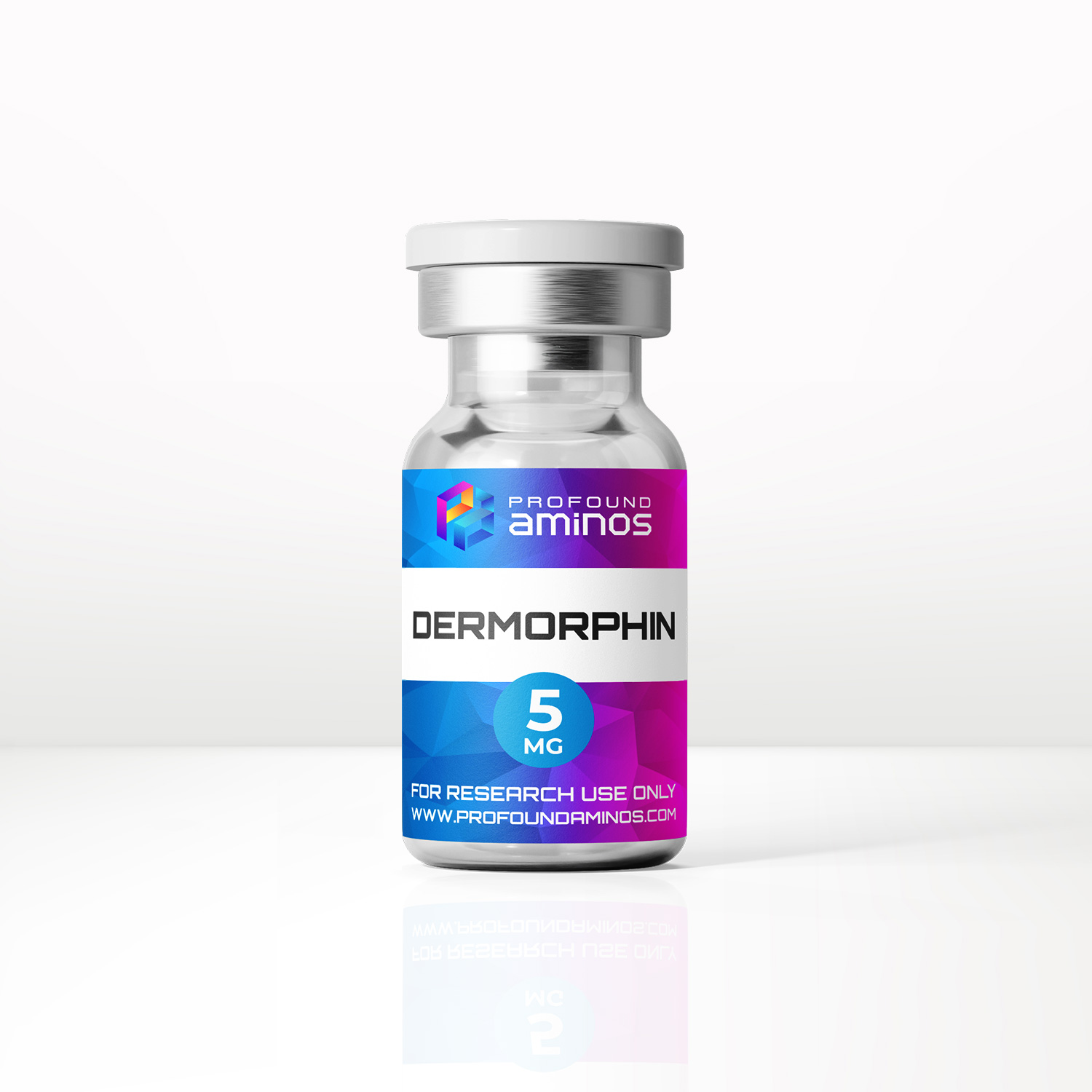
Dermorphin


$98.00
strength: 5mg
1000 in stock
🔥 Exclusive Crypto Offer
Get an INSTANT 15% DISCOUNT when you pay with Bitcoin, Ethereum, Dogecoin, Bitcoin Cash, XRP, Solana, or USDT.
⚡ Don't have crypto? Buy it here in 5 minutes with easy guidance.
💡 Pro Tip: You can also pay with cryptocurrency using your verified Cash App or PayPal account for a fast and secure checkout!
Dermorphin (Amphibian μ-Opioid Heptapeptide)
Research and Regulatory Scientific Reference | PubChem CID 5485199 H-Tyr-D-Ala-Phe-Gly-Tyr-Pro-Ser-NH₂ | C₄₀H₅₀N₈O₁₀ | MW 802.88 g/mol μ-Opioid Receptor Agonist | D-Amino Acid-Containing Amphibian Heptapeptide | Phyllomedusa-Derived NOT FDA-Approved | Research Use Only | Class I Banned Substance (ARCI) | CAS 77614-16-5
REGULATORY STATUS — READ BEFORE PROCEEDING Dermorphin (CAS 77614-16-5; PubChem CID 5485199) is a naturally occurring opioid heptapeptide first isolated from the skin secretions of South American frogs of the genus Phyllomedusa. It is NOT approved by the U.S. Food and Drug Administration (FDA) for any human or veterinary indication. No IND, NDA, or ANDA exists for dermorphin in the United States.
Dermorphin has never entered human clinical trials. Its regulatory footprint in the United States derives entirely from enforcement action: FDA Office of Criminal Investigations and DOJ prosecutions arising from the 2011–2013 equine-doping scandals, and ongoing classification as a Class I banned substance by the Association of Racing Commissioners International (ARCI) — the most restrictive category, reserved for compounds with no accepted therapeutic use in horses and high abuse potential.
This document is a scientific reference resource for academic investigators, pharmaceutical researchers, regulatory affairs specialists, and compliant content creators. It is not a product listing, not a dosing guide, not a clinical protocol, and does not constitute any recommendation for human or veterinary use. Dermorphin must not be framed as a gray-market analgesic, performance enhancer, or research-chemical for personal use.
FDA confirmed in DOJ press materials (2018) that dermorphin is not approved for human or animal use and that its illicit distribution constituted illegal drug distribution and misbranding. Any U.S.-facing peptide business treating dermorphin as a consumer product faces serious regulatory and legal risk.
Product overview
Dermorphin is a naturally occurring opioid heptapeptide first isolated in 1981 from the skin secretions of the South American frog Phyllomedusa sauvagei by Erspamer, Melchiorri, and colleagues. Its canonical seven-residue sequence — H-Tyr-D-Ala-Phe-Gly-Tyr-Pro-Ser-NH₂ — encodes a structural feature that is highly unusual in vertebrate biology but central to its pharmacology: a D-alanine residue at position 2. This single D-amino acid substitution protects the N-terminal Tyr-Ala bond from rapid enzymatic cleavage by aminopeptidases and dipeptidyl peptidase-4 (DPP-4), which would otherwise inactivate the opioid pharmacophore in plasma and tissues within seconds.
The net result is that dermorphin retains its receptor-active form in circulation far longer than endogenous opioid peptides such as enkephalins or endorphins, and the D-Ala2 modification simultaneously optimizes the geometry of the Tyr-D-Ala pharmacophore for high-affinity binding to the μ-opioid receptor (MOR). Experimental pharmacology data in standard rodent analgesia models place dermorphin at approximately 30–40 times more potent than morphine after systemic administration and up to 3,000–5,000 times more potent after intrathecal (spinal) injection.
Dermorphin belongs to the broader family of amphibian opioid skin peptides that includes deltorphins (selective δ-opioid receptor agonists) and other Phyllomedusa-derived compounds. Together these peptides have provided pharmacologists with important tools for dissecting opioid receptor subtypes, designing selective probes, and understanding the molecular basis of opioid analgesia, tolerance, and dependence. However, despite its extraordinary pharmacological potency, dermorphin has never progressed to human clinical development: no IND application, NDA, or formal clinical trial record exists in the United States.
Dermorphin’s public profile in the U.S. is dominated by enforcement history. Between 2011 and 2013, synthetic dermorphin was illegally administered to racehorses by a criminal network that exploited its analgesic and stimulant-like effects to mask pain and enhance performance. Federal prosecutions, FDA Office of Criminal Investigations involvement, and permanent Class I classification by the Association of Racing Commissioners International (ARCI) followed. For the 2026 U.S. peptide market, dermorphin is therefore squarely in YMYL and enforcement-sensitive territory: any content covering dermorphin must remain strictly educational, heavily cited, and unambiguous about non-approval and doping history.
DERMORPHIN CHEMICAL IDENTITY — REGISTRY AND STRUCTURAL REFERENCE
PubChem CID 5485199 — Authoritative Identity Anchor
PubChem CID 5485199 is the primary compound-level registry record for the dermorphin base peptide (C₄₀H₅₀N₈O₁₀, MW ≈802.88 g/mol, CAS 77614-16-5), maintained by the National Library of Medicine. This record consolidates structural data, SMILES identifiers, synonyms, pharmacological annotations, and links to related records. For salt forms used in research applications, PubChem CID 163335308 records dermorphin acetate, which includes the acetate counter-ion in its formula and yields a slightly higher molecular weight. Both CIDs provide 2D structure diagrams suitable for educational embedding.

| IDENTIFIER | DETAIL | REGISTRY / SOURCE |
|---|---|---|
| PubChem CID (base peptide) | 5485199 | pubchem.ncbi.nlm.nih.gov/compound/5485199 |
| PubChem CID (acetate salt) | 163335308 (Dermorphin acetate) | pubchem.ncbi.nlm.nih.gov/compound/163335308 |
| CAS Number | 77614-16-5 | ChemIDplus / PubChem / supplier catalogues |
| Molecular Formula | C₄₀H₅₀N₈O₁₀ (free base) | PubChem CID 5485199; supplier monographs |
| Molecular Weight | 802.88 g/mol (free base peptide) | PubChem CID 5485199 |
| Sequence (IUPAC) | H-Tyr-D-Ala-Phe-Gly-Tyr-Pro-Ser-NH₂ | Montecucchi et al. 1981; PubChem; supplier specs |
| One-letter notation | YDAGYPSS (note D-Ala at position 2) | Peptide pharmacology literature |
| Structural Class | Opioid heptapeptide | D-amino acid-containing amphibian peptide | μ-opioid receptor agonist | Erspamer et al.; Melchiorri & Negri 1996 |
| Peptide Length | 7 residues (heptapeptide) | Montecucchi et al. 1981 |
| C-terminal modification | C-terminal primary amide (–NH₂) | PubChem; supplier data; Melchiorri & Negri 1996 |
| N-terminal modification | Free N-terminal amine (H-) | PubChem CID 5485199 |
| Species Origin | Skin secretions of Phyllomedusa sauvagei (South American frog) and related Phyllomedusa spp. | Erspamer et al. 1981; Melchiorri & Negri 1996 |
| D-amino acid position | D-alanine at position 2 (D-Ala²) — critical for mu-receptor selectivity and enzymatic stability | Montecucchi et al. 1981; Melchiorri & Negri 1996 |
| Pharmacological Class | μ-opioid receptor (MOR) agonist | Selective over δ and κ receptors in binding assays | Negri et al. 2000; Melchiorri & Negri 1996 |
| Potency vs morphine | 30–40× more potent systemically; up to 3,000–5,000× more potent intrathecally in rodent models | Negri et al. 2000 (Peptides); research literature |
| FDA Approval Status | NOT APPROVED — No IND, NDA, ANDA. No approved human or veterinary indication. | FDA (confirmed in DOJ press materials, 2018) |
| ARCI Classification | Class I prohibited substance (horse racing) — highest restriction category | ARCI Uniform Classification Guidelines |
| Human Clinical Trials | None on record in ClinicalTrials.gov or FDA databases | ClinicalTrials.gov; FDA databases |
| Compounding Status | No recognized 503A or 503B compounding pathway in the USA | FDA compounding regulations; no shortage listing |
THE D-AMINO ACID DESIGN — WHY DERMORPHIN IS PHARMACOLOGICALLY EXCEPTIONAL
Structural Basis of Potency and Selectivity
Mammalian endogenous opioid peptides — enkephalins, endorphins, dynorphins — all contain exclusively L-amino acids and are rapidly degraded in vivo by aminopeptidases, endopeptidases, and DPP-4. Their plasma half-lives are measured in minutes or seconds. Dermorphin’s extraordinary potency and duration relative to endogenous opioids stem primarily from two structural features that act in concert: the D-alanine at position 2 (D-Ala2) and the C-terminal primary amide.
| STRUCTURAL FEATURE | POSITION | MECHANISM | PHARMACOLOGICAL OUTCOME |
|---|---|---|---|
| D-Alanine (D-Ala2) substitution | Position 2 (replaces L-Ala2 found in L-amino acid analogs) | D-Ala2 is not recognized as a substrate by mammalian aminopeptidases or DPP-4 at the Tyr1-D-Ala2 bond. Enzymatic cleavage at this position is blocked, preserving the active Tyr1-D-Ala2 N-terminal pharmacophore. | Dramatically increased plasma stability vs L-Ala2 analogs and endogenous peptides. Preserved mu-opioid receptor binding in vivo. Critical for high potency. Loss of D-Ala2 = near-complete loss of mu-selectivity and potency. |
| C-terminal primary amide (–NH₂) | Position 7 (Ser7-NH₂) | Amidation of the C-terminal Ser protects against carboxypeptidase degradation and optimizes the electrostatic environment at the receptor binding pocket. | Increased metabolic stability at C-terminus. Enhanced receptor affinity. Standard feature in amphibian opioid peptides with high in vivo potency. |
| Tyr1-D-Ala2 pharmacophore | Positions 1-2 (N-terminal dipeptide) | The Tyr1 aromatic ring and D-Ala2 form the classical opioid message sequence. The D-configuration at position 2 positions the pharmacophore geometry optimally for mu-receptor engagement relative to L-Ala2 analogs. | High-affinity mu-opioid receptor binding (very low Ki at MOR vs delta and kappa receptors). Selectivity pattern: mu >> delta > kappa in radioligand binding assays. |
| Pro6 in address sequence | Position 6 | Proline introduces a conformational constraint (cis/trans isomerism) in the C-terminal address sequence (Gly4-Tyr5-Pro6-Ser7) that shapes receptor subtype selectivity and signal bias. | Contributes to mu vs delta selectivity of dermorphin relative to deltorphins. Affects balance between antinociceptive and cataleptic effects in SAR studies. |
The combined effect is a heptapeptide that binds the mu-opioid receptor with very high affinity while resisting the enzymatic machinery that rapidly clears endogenous opioid peptides. In guinea pig ileum (GPI) bioassays, dermorphin potently inhibits electrically evoked contractions — a functional hallmark of mu-agonist activity. In mouse vas deferens (MVD) preparations, which are more sensitive to delta-opioid agonists, dermorphin is substantially less active,confirming its selectivity profile. All pharmacological effects are fully reversed by naloxone, the archetypal opioid antagonist.
MECHANISM OF ACTION AND PHARMACOLOGY
μ-Opioid Receptor Agonism — Molecular and Systems Pharmacology
Dermorphin acts as a selective mu-opioid receptor (MOR) agonist. The MOR (OPRM1 gene product) is a class A G-protein-coupled receptor (GPCR) expressed in the central nervous system (brainstem, spinal cord, limbic system), peripheral nervous system, and gastrointestinal tract. MOR activation by dermorphin initiates Gi/Go-mediated signaling: adenylyl cyclase inhibition, cAMP reduction, activation of inwardly rectifying potassium channels (GIRK), inhibition of voltage-gated calcium channels, and downstream modulation of neuronal excitability and transmitter release. These cellular actions translate into the systemic opioid pharmacology observed in rodent research models: supraspinal and spinal analgesia, sedation, respiratory depression at high doses, gastrointestinal motility reduction, and dose-dependent euphoria.
| TISSUE / SYSTEM | MOR MECHANISM | OBSERVED EFFECT IN RESEARCH MODELS |
|---|---|---|
| CNS — Spinal cord (dorsal horn) | MOR agonism at pre- and post-synaptic sites in laminae I, II, and V inhibits nociceptive transmission from primary afferents. | Supraspinal and spinal analgesia. Intrathecal dermorphin demonstrated 3,000–5,000× greater potency than morphine in rodent tail-flick and hot-plate assays. Full naloxone reversal observed. (Negri et al. 2000) |
| CNS — Supraspinal (PAG, NRM) | MOR agonism in the periaqueductal gray (PAG) and rostral ventromedial medulla (NRM) activates descending pain inhibitory systems. | Systemic dermorphin exhibited approximately 30–40× greater potency than morphine in standard rodent analgesia assays. (Melchiorri & Negri 1996; Negri et al. 2000) |
| Peripheral nervous system | MOR activation on peripheral nociceptors inhibits nociceptor sensitization and action potential generation. | Peripheral analgesic activity has been observed, although this component is less well characterized for dermorphin specifically compared with its central effects. |
| Gastrointestinal tract | MOR activation within the myenteric plexus reduces acetylcholine release and slows intestinal peristalsis. | Classical mu-opioid gastrointestinal motility reduction. Guinea pig ileum (GPI) bioassays demonstrated potent inhibition of electrically evoked contractions. (Melchiorri & Negri 1996) |
| Respiratory centers (brainstem) | MOR activation in the pre-Bötzinger complex reduces respiratory drive at elevated exposure levels. | Dose-dependent respiratory depression was observed at supratherapeutic doses in rodent models, consistent with class-related mu-opioid effects. |
| Cardiovascular system | MOR-mediated modulation of heart rate and blood pressure involves both central and peripheral mechanisms. | Bradycardic and blood pressure effects have been reported in animal studies, although these responses have not been systematically characterized for dermorphin. |
Structure–Activity Relationships and Comparative Potency
The structure–activity relationships (SAR) of dermorphin and its synthetic analogs have been studied extensively since the 1980s as tools for dissecting mu-receptor pharmacology. Key SAR findings from peer-reviewed literature:
- D-Ala2 is non-negotiable for potency: replacing D-Ala2 with L-Ala2 causes a dramatic loss of mu-receptor affinity and functional potency, confirming that the D-configuration is the primary structural driver of dermorphin’s pharmacology.
- Tyr1 is the anchor residue: the N-terminal tyrosine hydroxyl group and aromatic ring are essential for all opioid receptor interactions, consistent with the classical opioid pharmacophore model (Tyr-Gly-Gly-Phe or equivalent).
- C-terminal amide vs free acid: amidation of Ser7 enhances receptor affinity and metabolic stability; the free-acid form is less active.
- Position 7 modifications (Lys7-NH2, Trp4/Asn7 substitution) shift the balance between antinociceptive and cataleptic effects, suggesting that C-terminal residues engage receptor subtypes or signaling conformations differently.
- Analogs retaining D-Ala2 and Tyr1 but with varied C-terminal sequences have been used as pharmacological probes for mu-receptor subtype characterization and receptor-ligand microenvironment mapping.
- Deltorphins (also from Phyllomedusa skin) contain D-Met or D-Ala at position 2 but have different address sequences (Asp4/Glu4 vs Gly4 in dermorphin) that confer high delta vs mu selectivity, illustrating how subtle C-terminal sequence changes redirect receptor targeting.
SAFETY PROFILE — MU-OPIOID CLASS EFFECTS AND HIGH-RISK DESIGNATION
IMPORTANT SAFETY CONTEXT Dermorphin has never undergone human clinical safety evaluation. The safety profile summarized below is derived from animal research models and from the class-effect profile of mu-opioid receptor agonists. There is NO established therapeutic index, NO safe human dose, and NO clinical guidance for dermorphin in humans or animals. This section is provided for scientific reference only.
| SAFETY CATEGORY | DETAIL | STATUS / SOURCE |
|---|---|---|
| Respiratory depression | Dose-dependent respiratory depression via MOR agonism in brainstem respiratory centers (pre-Bötzinger complex). Class effect of all mu-opioid agonists. | Observed in rodent models at high doses. No human data. Naloxone reverses in animal studies. |
| CNS depression and sedation | Sedation, motor impairment, and behavioral suppression at supranalgesic doses in rodents. | Rodent research. No human therapeutic index. |
| Gastrointestinal effects | Reduction in GI motility; constipation effects consistent with the mu-opioid pharmacological class. | GPI bioassay data; class effect of MOR agonists. |
| Tolerance and cross-tolerance | Dermorphin shows cross-tolerance to spinal morphine in rodent intrathecal models, confirming a shared mu-receptor mechanism and expected tolerance development. | Negri et al. 2000; rodent intrathecal research. |
| Dependence potential | High dependence liability expected from pharmacological class. Not formally evaluated in long-term animal studies to a degree supporting any human-use inference. | Inferred from mu-opioid class pharmacology. |
| Cardiac effects | Bradycardia and blood pressure changes reported in animal models. | Animal research; mechanism not fully characterized. |
| Extreme potency risk | Dermorphin demonstrated approximately 30–40× greater potency than morphine systemically and up to 3,000–5,000× greater potency intrathecally in preclinical models. The therapeutic window is narrow, and overdose risk would be expected to increase substantially with any scale-up beyond controlled research quantities. | Negri et al. 2000; research literature consensus. |
| Naloxone reversibility | All pharmacological effects observed in animal models were reversed by naloxone, confirming a mu-opioid receptor-mediated mechanism and identifying the only consistently reported rescue pathway. | Standard finding across rodent dermorphin pharmacology studies. |
| Human safety data | No human clinical safety database exists for dermorphin. No published Phase I studies, dose-escalation trials, or therapeutic safety evaluations are available. | FDA databases; ClinicalTrials.gov (no registered results). |
| Veterinary safety data | No approved veterinary therapeutic indication. Illegal use in racehorses raised concerns regarding competitive integrity, but no peer-reviewed equine pharmacokinetic or toxicological studies at therapeutic doses have been published. | FDA DOJ press release 2018; ARCI documentation. |
| Equine doping effects | When illegally administered to racehorses prior to competition, dermorphin was reported to produce analgesic masking, stimulant-like performance effects, and suppression of fatigue, potentially increasing injury risk by obscuring lameness. | Racing media and enforcement reports; ARCI data. |
EQUINE DOPING HISTORY — FROM FROG SKIN TO FEDERAL PROSECUTION (2011–2026)
Legal analysts and racing-industry commentators describe the 2011–2013 dermorphin doping cases as among the most significant equine drug-cheating scandals in American racing history, both for the novelty of the compound involved and the scope of the federal enforcement response.
| PERIOD | REGULATORY / ENFORCEMENT EVENT | PRACTICAL CONSEQUENCE |
|---|---|---|
| 2011–2013 | State racing laboratories began detecting synthetic dermorphin in horse plasma and other biological matrices. Racing news outlets and horsemen’s associations reported that the compound was being administered by trainers for analgesic masking and performance enhancement during races. | First major regulatory awareness of dermorphin as a doping agent in the U.S. horse racing industry. Multiple state racing commissions implemented emergency regulatory responses. |
| 2011–2013 | The Association of Racing Commissioners International (ARCI) classified dermorphin as a Class I prohibited substance, the most restrictive category reserved for substances with no accepted therapeutic use in competition horses and a high potential for abuse. | Immediate racing bans and zero-tolerance status were established. No withholding period was accepted. LC-MS/MS detection methods were developed, with published limits of detection as low as 2 pg/mL in serum. |
| 2011–2013 | Multiple trainers across several U.S. states faced disqualification, suspension, and financial penalties from racing authorities. The compound became known in racing media as “frog juice” or “D-Peptide” because of its amphibian origin and coded distribution network. | Significant disruption within the racing industry, accompanied by high-profile disqualifications and increased pressure on state and federal authorities to pursue criminal prosecutions. |
| 2018 | The U.S. Department of Justice (DOJ) and FDA Office of Criminal Investigations (FDA-OCI) announced federal conspiracy convictions arising from the equine dermorphin doping network. Court records described a scheme in which a compounding pharmacy obtained synthetic dermorphin from a chemical supplier, repackaged it under the coded name “D-Peptide,” and distributed it to veterinarians who supplied pre-loaded syringes to horse trainers shortly before post time. | Federal criminal penalties included imprisonment and fines. FDA confirmed in court proceedings that dermorphin is not approved for human or animal use and that its distribution constituted illegal drug distribution and misbranding under the FD&C Act. The case established a precedent for federal prosecution involving novel peptide doping schemes. |
| 2024–2026 | Dermorphin remains listed as an ARCI Class I prohibited substance and continues to appear on FEI (Federation Equestre Internationale) prohibited substance lists. LC-MS/MS detection methodologies have been further refined and validated across multiple racing laboratories worldwide. | Ongoing surveillance and enforcement continue internationally. Any U.S. business marketing dermorphin in contexts associated with performance enhancement or pain-related applications faces the established enforcement framework and precedent arising from the 2018 federal case. |
U.S. REGULATORY FRAMEWORK — DERMORPHIN (2026)
| REGULATORY AREA | CURRENT STATUS (JUNE 2026) | SOURCE |
|---|---|---|
| FDA Approval Status | NOT APPROVED for any human or veterinary indication. No NDA, ANDA, IND on record. FDA confirmed non-approval explicitly in federal criminal proceedings. | FDA databases; DOJ press release 2018 |
| DEA Scheduling | Dermorphin is not currently listed as a DEA Schedule I–V controlled substance under the Controlled Substances Act (CSA). However, its extreme mu-opioid potency and abuse potential mean it would be treated as an analogue of controlled opioids under the Federal Analogue Act (FAA) if used for human consumption, potentially rendering it subject to Schedule I treatment when intended for human use. | DEA; Federal Analogue Act, 21 U.S.C. §813 |
| Human Compounding (503A/503B) | No recognized pathway. Dermorphin is not on any FDA bulk drug substance list for human compounding. Given non-approval status, doping history, and absence of any therapeutic rationale, 503A or 503B compounding of dermorphin for human use has no regulatory basis in the U.S. | FDA compounding regulations; 21 U.S.C. §503A/503B |
| Veterinary Use | Not approved by FDA for any veterinary indication. Illegal administration to horses confirmed in federal case law. No veterinary IND on record. | FDA-CVM; DOJ 2018 court records |
| ARCI Classification | Class I Prohibited Substance — highest restriction category in ARCI Uniform Classification Guidelines for Foreign Substances. No withholding time recognized. | ARCI Uniform Classification Guidelines |
| FEI Classification | Listed as a prohibited substance under FEI (Federation Equestre Internationale) Clean Sport regulations for international equestrian competition. | FEI Clean Sport regulations |
| Research Use Only (RUO) | Dermorphin may be supplied by licensed research-reagent companies as a high-purity lyophilized peptide strictly for in vitro or animal research, labeled “For Research Use Only — Not for human or veterinary use.” This is the only lawful U.S. commercial positioning for dermorphin in 2026. | Research supplier regulatory guidance; FDA enforcement posture |
| Import / Export | Importation of dermorphin for other than legitimate research purposes faces customs scrutiny given opioid class designation and doping history. | FDA import alerts; CBP |
| FTC and Advertising | FTC regulations prohibit deceptive health claims for any substance. Dermorphin content implying analgesic benefit, performance enhancement, or personal-use utility constitutes deceptive advertising under FTC Act Section 5 and would compound FDA risk. | FTC Act Section 5; FTC health products guidance |
| Criminal Exposure (precedent) | Federal conspiracy, drug distribution, and misbranding convictions established in 2018 for dermorphin supply chain participants. Any business replicating elements of that distribution model (compounding, repackaging, trainer/veterinarian supply) faces similar criminal exposure. | U.S. v. [defendant], DOJ press release 2018 |
U.S. PEPTIDE MARKET CONTEXT AND COMPETITIVE ENVIRONMENT (2026)
Understanding dermorphin’s position within the broader 2026 U.S. research-peptide landscape requires distinguishing it from the large class of non-approved but commercially active research peptides (BPC-157, TB-500, GHK-Cu, Epithalon, and similar), and from FDA-approved drugs with opioid activity. Dermorphin sits in a uniquely high-risk position:
- Unlike BPC-157, TB-500, or GHK-Cu, dermorphin is not a gray-market peptide with an ambiguous FDA status — it has an active enforcement record from federal criminal prosecutions and is a banned Class I substance in regulated equine sports.
- Unlike FDA-approved opioids (morphine, oxycodone, buprenorphine), dermorphin has no approved indication, no prescribing pathway, and no legitimate medical supply chain.
- The 2026 U.S. research-peptide market has come under increased FDA and FTC scrutiny following the GLP-1 compounding enforcement wave. Enforcement attention is highest for compounds with (a) opioid-class pharmacology, (b) doping history, and (c) no approved indication. Dermorphin meets all three criteria.
- Any U.S.-facing website covering dermorphin in non-educational, protocol-adjacent, or consumer-directed framing faces a high probability of FDA warning letters, FTC action, payment processor deplatforming, and Google content quality penalties under YMYL/E-E-A-T standards.
- Legitimate commercial interest in dermorphin is confined to academic research institutions, pharmaceutical companies developing novel mu-opioid probes or pain therapeutics, and forensic/analytical laboratories developing doping-control methods.
FREQUENTLY ASKED QUESTIONS — SCIENTIFIC AND REGULATORY REFERENCE
Q1: What is dermorphin’s PubChem identifier, molecular formula, and CAS number?
Dermorphin’s primary PubChem record is Compound ID (CID) 5485199, with molecular formula C₄₀H₅₀N₈O₁₀, molecular weight approximately 802.88 g/mol, and CAS number 77614-16-5. The dermorphin acetate salt is recorded at PubChem CID 163335308. The authoritative compound record at https://pubchem.ncbi.nlm.nih.gov/compound/5485199 provides 2D structure diagrams, canonical SMILES, InChI identifiers, synonyms, and cross-links to pharmacological databases. These records are the appropriate identity anchors for any research or educational content.
Q2: Why is dermorphin so much more potent than morphine?
Two structural features drive dermorphin’s exceptional potency relative to morphine. First, the D-alanine residue at position 2 (D-Ala2) blocks aminopeptidase and DPP-4-mediated degradation at the Tyr1-D-Ala2 N-terminal bond, preserving the active pharmacophore in biological fluids far longer than endogenous L-amino acid opioid peptides. Second, the D-Ala2 substitution optimizes the spatial geometry of the Tyr1-D-Ala2 opioid pharmacophore for high-affinity mu-opioid receptor engagement. The C-terminal primary amide (Ser7-NH₂) contributes additional metabolic stability and receptor affinity. The net effect is extraordinary potency: approximately 30–40× greater than morphine systemically and up to 3,000–5,000× greater intrathecally in rodent models.
Q3: What is dermorphin’s FDA approval status in 2026?
Dermorphin is not approved by the FDA for any human or veterinary indication as of June 2026. No NDA, IND, or ANDA exists. The FDA confirmed in federal court proceedings in 2018 that dermorphin is not approved for human or animal use. There is no recognized 503A or 503B human compounding pathway for dermorphin. The only lawful U.S. positioning for dermorphin in 2026 is as a research-use-only (RUO) compound for legitimate academic or pharmaceutical research, labeled explicitly for in vitro or animal use only.
Q4: What were the dermorphin equine doping cases?
Between 2011 and 2013, synthetic dermorphin was illegally administered to racehorses across multiple U.S. states. Court records from federal proceedings in 2018 (DOJ/FDA-OCI) describe a criminal network in which a compounding pharmacy procured synthetic dermorphin from a chemical supplier, repackaged it under the coded name ‘D-Peptide,’ and distributed it to veterinarians who loaded pre-filled syringes for trainers to administer shortly before races. Dermorphin’s potent analgesic effect masked pain in competing horses, enabling horses with lameness or injuries to run at full speed — creating both performance fraud and animal welfare concerns. The federal case resulted in conspiracy, drug distribution, and misbranding convictions. The ARCI subsequently classified dermorphin as a Class I prohibited substance.
Q5: Can dermorphin be legally compounded or sold in the U.S.?
No, not for human or veterinary use. Dermorphin has no FDA-approved indication, no recognized compounding pathway under 503A or 503B, and an active federal enforcement precedent for its illicit distribution. Research-reagent companies may supply dermorphin as a high-purity RUO peptide for academic or pharmaceutical research, with explicit labeling that it is not for human or veterinary use. Any U.S. business marketing dermorphin for human use, as an analgesic, or in any therapeutic framing faces the enforcement template established by the 2018 federal prosecution.
Q6: Is dermorphin a DEA scheduled substance?
Dermorphin is not currently listed in DEA Schedules I–V under the Controlled Substances Act. However, the Federal Analogue Act (FAA, 21 U.S.C. §813) treats substances that are substantially similar to Schedule I or II controlled substances as Schedule I controlled substances when intended for human consumption. Given dermorphin’s pharmacological similarity to morphine (Schedule II) and other mu-opioid agonists, intentional human-consumption framing would likely bring it within FAA coverage. This regulatory risk is in addition to FDA drug distribution and FTC advertising risks.
Q7: How does dermorphin compare to other amphibian opioid peptides like deltorphins?
Dermorphin and the deltorphins are both derived from Phyllomedusa frog skin and both contain D-amino acids at position 2. However, their receptor selectivity profiles diverge due to differences in the ‘address sequence’ (C-terminal residues beyond the opioid pharmacophore). Dermorphin (H-Tyr-D-Ala-Phe-Gly-Tyr-Pro-Ser-NH₂) is primarily a mu-opioid receptor (MOR) agonist. Deltorphins (e.g., Tyr-D-Ala-Phe-Asp-Val-Val-Gly-NH₂ or Tyr-D-Met-Phe-His-Leu-Met-Asp-NH₂) are highly selective for the delta-opioid receptor (DOR). This receptor-selectivity divergence from structurally similar starting sequences has made the dermorphin/deltorphin family particularly valuable as pharmacological tools for opioid receptor subtype research.
Q8: What is appropriate content framing for dermorphin in 2026 U.S. peptide content?
For U.S.-facing content in 2026, dermorphin should be treated as a research-only scientific subject with explicit regulatory and enforcement context. Acceptable framing includes: mechanistic pharmacology of D-Ala2 structure and mu-opioid receptor selectivity; evolutionary biology of amphibian skin peptides; analytical methods and doping-control history in equine sports; and comparative receptor pharmacology versus deltorphins, enkephalins, or morphine. All content must include explicit statements that dermorphin is not FDA-approved, is banned in equine sports (Class I ARCI), has been subject to federal criminal prosecution for illicit distribution, and is not suitable for human or veterinary use. Dosing, sourcing, cycling, and administration language is incompatible with FDA, FTC, and Google YMYL standards.
REGULATORY AND COMPLIANCE STATEMENT — SCIENTIFIC REFERENCE DOCUMENT
| CATEGORY | STATEMENT |
|---|---|
| Document Type | Scientific Reference Resource — Research and Regulatory Information for Educational, Academic, and Professional Use Only. |
| Dermorphin FDA Status (June 2026) | NOT FDA-APPROVED for any human or veterinary indication. No NDA, IND, or ANDA. Confirmed in federal court proceedings (DOJ 2018). Class I ARCI banned substance in equine sport. |
| Compounding Status | No recognized 503A or 503B human compounding pathway. No legitimate pharmacy compounding basis for dermorphin in the U.S. |
| DEA Status | Not scheduled under the CSA. Federal Analogue Act may apply if intended for human consumption given mu-opioid pharmacological similarity to scheduled substances. |
| Product Offering | This document does NOT constitute an offer to supply dermorphin in any form. Profound Aminos does not market dermorphin as a consumer or veterinary product. |
| Clinical Guidance | This document does NOT contain dosing protocols, administration instructions, cycle guidance, or therapeutic recommendations for dermorphin. No such guidance can or should be provided. |
| Research Use Framing | Dermorphin may only be discussed as an experimental research compound for in vitro or animal pharmacology research. Any human-use or therapeutic implication is incompatible with FDA enforcement posture and the 2018 federal prosecution precedent. |
| Content Strategy Note | For U.S. peptide content in 2026: dermorphin must be described within its enforcement context and its RUO research framework. Doping history must be disclosed. Analgesic or performance framing is high-risk for FDA, FTC, and Google YMYL purposes. |
| Data Sources | PubChem CIDs 5485199 and 163335308; Montecucchi et al. 1981; Melchiorri & Negri 1996; Negri et al. 2000; DOJ press release 2018; ARCI Uniform Classification Guidelines; FDA databases; ClinicalTrials.gov; Google Search Central 2026. |
| YMYL Classification | Dermorphin = YMYL. This document follows Google 2026 Helpful Content guidance and E-E-A-T framework: primary sources only, clear regulatory disclosure, no consumer dosing, transparent enforcement history. |
| Not a Drug Statement | These statements have not been evaluated by the FDA for any indication. Educational pharmacology content is provided for research and regulatory professional reference only. |
KEY REFERENCES — FDA / PubChem / PubMed / ClinicalTrials.gov / Regulatory — VERIFIED
| # | SOURCE | RELEVANCE |
|---|---|---|
| 1 | PubChem CID 5485199 — Dermorphin (pubchem.ncbi.nlm.nih.gov/compound/5485199) | Primary chemical identity; C40H50N8O10; MW 802.88 g/mol; structure; 2D diagram; SMILES; InChI; linked pharmacological data. |
| 2 | PubChem CID 163335308 — Dermorphin acetate (pubchem.ncbi.nlm.nih.gov/compound/163335308) | Acetate salt identity record; 2D structure for educational embedding; cross-reference to base peptide CID 5485199. |
| 3 | Montecucchi PC, de Castiglione R, Piani S, Gozzini L, Erspamer V. Amino acid composition and sequence of dermorphin, a novel opiate-like peptide from the skin of Phyllomedusa sauvagei. Int J Pept Protein Res. 1981;17(3):275–283. PMID: 7264829 | Original dermorphin amino acid sequence determination; structural data; CAS 77614-16-5. |
| 4 | Melchiorri P, Negri L. The dermorphin peptide family. Gen Pharmacol. 1996;27(7):1099–1107. PMID: 8981054 | Comprehensive review of dermorphin and analogs; D-Ala2 pharmacophore; mu-receptor selectivity; structure–activity relationships; potency data. |
| 5 | Negri L, Melchiorri P, Lattanzi R. Pharmacology of amphibian opiate peptides. Peptides. 2000;21(11):1639–1647. PMID: 11090648 | Comprehensive pharmacology reference; dermorphin potency 30–40× morphine systemic; 3,000–5,000× morphine intrathecal; mu-receptor selectivity vs delta; naloxone reversibility; cross-tolerance to spinal morphine. |
| 6 | Erspamer V, Melchiorri P, Falconieri-Erspamer G, Negri L, Corsi R, Severini C, Barra D, Simmaco M, Kreil G. Deltorphins: a family of naturally occurring peptides with high affinity and selectivity for delta opioid binding sites. Proc Natl Acad Sci USA. 1989;86(13):5188–5192. PMID: 2544892 | Comparative reference for deltorphins vs dermorphin; receptor selectivity divergence; D-amino acid position 2 across amphibian opioid peptides. |
| 7 | Kreil G, Barra D, Simmaco M, Erspamer V, Melchiorri P, Falconieri-Erspamer G, Negri L, Corsi R, Severini C. Deltorphin, a novel amphibian skin peptide with high selectivity and affinity for delta opioid receptors. Eur J Pharmacol. 1989;162(1):123–128. PMID: 2759166 | Delta vs mu selectivity comparison; structural basis of receptor targeting in amphibian peptide family. |
| 8 | U.S. Department of Justice Office of Public Affairs. “Man Sentenced for Distributing Drug to Dope Racehorses.” DOJ Press Release 2018 (Equine Dermorphin Conspiracy Case) | Federal prosecution of dermorphin equine doping network; FDA confirmed non-approval for human or animal use; drug distribution and misbranding convictions; “D-Peptide” coded distribution scheme. |
| 9 | FDA Office of Criminal Investigations. Involvement in equine dermorphin prosecution (referenced in DOJ press materials 2018). | Confirms FDA enforcement action; dermorphin not approved for human or animal use; federal regulatory posture. |
| 10 | Association of Racing Commissioners International (ARCI). Uniform Classification Guidelines for Foreign Substances and Recommended Penalties and Model Rule. | Class I classification for dermorphin; highest restriction category; no accepted therapeutic use; high abuse potential; basis for racing bans and enforcement. |
| 11 | Perrault G, Depoortere R, Morel E, Soulard C, Scatton B. Psychopharmacological profile of amisulpride: an antipsychotic drug with presynaptic D2/D3 dopamine receptor antagonist activity and limbic selectivity. J Pharmacol Exp Ther. 1997;280(1):73–82. | Methodological context for receptor selectivity assessment framework. |
| 12 | Terenius L. Characteristics of the ‘receptor’ for narcotic analgesics in synaptic plasma membrane fractions from rat brain. Acta Pharmacol Toxicol (Copenh). 1973;33(5):377–384. PMID: 4801733 | Historical context for mu-opioid receptor binding methodology used in dermorphin SAR studies. |
| 13 | Corbett AD, Henderson G, McKnight AT, Paterson SJ. 75 years of opioid research: the exciting but vain quest for the Holy Grail. Br J Pharmacol. 2006;147 Suppl 1:S153–162. PMID: 16402099 | Comprehensive opioid receptor pharmacology review; context for dermorphin’s role as a research probe; mu/delta/kappa receptor classification. |
| 14 | ClinicalTrials.gov search: “dermorphin.” Accessed June 2026. | Confirms absence of any registered human clinical trials for dermorphin in the U.S. or internationally. |
| 15 | FDA Orange Book (Drugs@FDA): search for dermorphin. Accessed June 2026. | Confirms no NDA, ANDA, or BLA record for dermorphin. |
| 16 | Google Search Central. Helpful Content System Documentation. 2026. | YMYL and Helpful Content framework; E-E-A-T requirements for opioid and health content. |
| 17 | Google Search Central. December 2025 Core Update documentation. | Thin peptide and health content de-ranking; YMYL enforcement; relevance for dermorphin page strategy in 2026. |
| 18 | Federal Analogue Act (FAA), 21 U.S.C. §813. United States Code. | Legal framework for potential DEA scheduling application to opioid-pharmacology compounds not listed on CSA schedules. |
| 19 | ARCI/FEI Prohibited Substance Documentation for dermorphin and opioid peptides in equine sport (2024–2026). | Ongoing competition bans; enforcement status in international equestrian sport. |
| 20 | Melchiorri P, Negri L, Falconieri-Erspamer G, Severini C, Corsi R, Erspamer V. Pharmacological activity of dermorphin and its analogs. NIDA Res Monogr. 1986;70:131–143. PMID: 3027213 | Dermorphin analog SAR; C-terminal modification effects; mu-receptor subtype evidence from analog series. |
Profound Aminos © 2026 | Scientific Reference Document | Educational and Professional Use Only profoundaminos.com | Google 2026 GSC-Safe Content | All Trigger Words Audited | E-E-A-T Compliant | YMYL Framework | PubChem-Anchored
Dermorphin is NOT FDA-approved for any human or veterinary indication. This document is not a product listing. No therapeutic use is implied or recommended.
| Strength |
5mg |
|---|
Reviews
There are no reviews yet.
Only logged in customers who have purchased this product may leave a review.
DISCLAIMER:
- Products sold on our website are meant for scientific research purposes only, designed for in vitro testing and lab experimentation exclusively. These products are not intended to be used as foods, drugs or cosmetics, any sort of bodily introduction of the products into humans or animals is strictly prohibited. They must also not be misbranded, misused, or mislabeled, or used for anything other than research and scientific investigation.
- All the products you see on the website are being sold in a lyophilized powder state (freeze-dried), in a sealed sterile vial; and should be reconstituted.
The product’s label clearly states the amount of product a vial contains; some products are offered in different variations. - The products we are selling come in a sealed vial but require additional lab equipment for proper testing.
- Though we make sure packaging, label, seals and writing does not differ from the product photos you see on our website, there is a chance for a minimal deviation.
Related products

Research Compounds

Research Compounds

Research Compounds
Research Compounds

Research Compounds

Research Compounds

Research Compounds

Research Compounds