
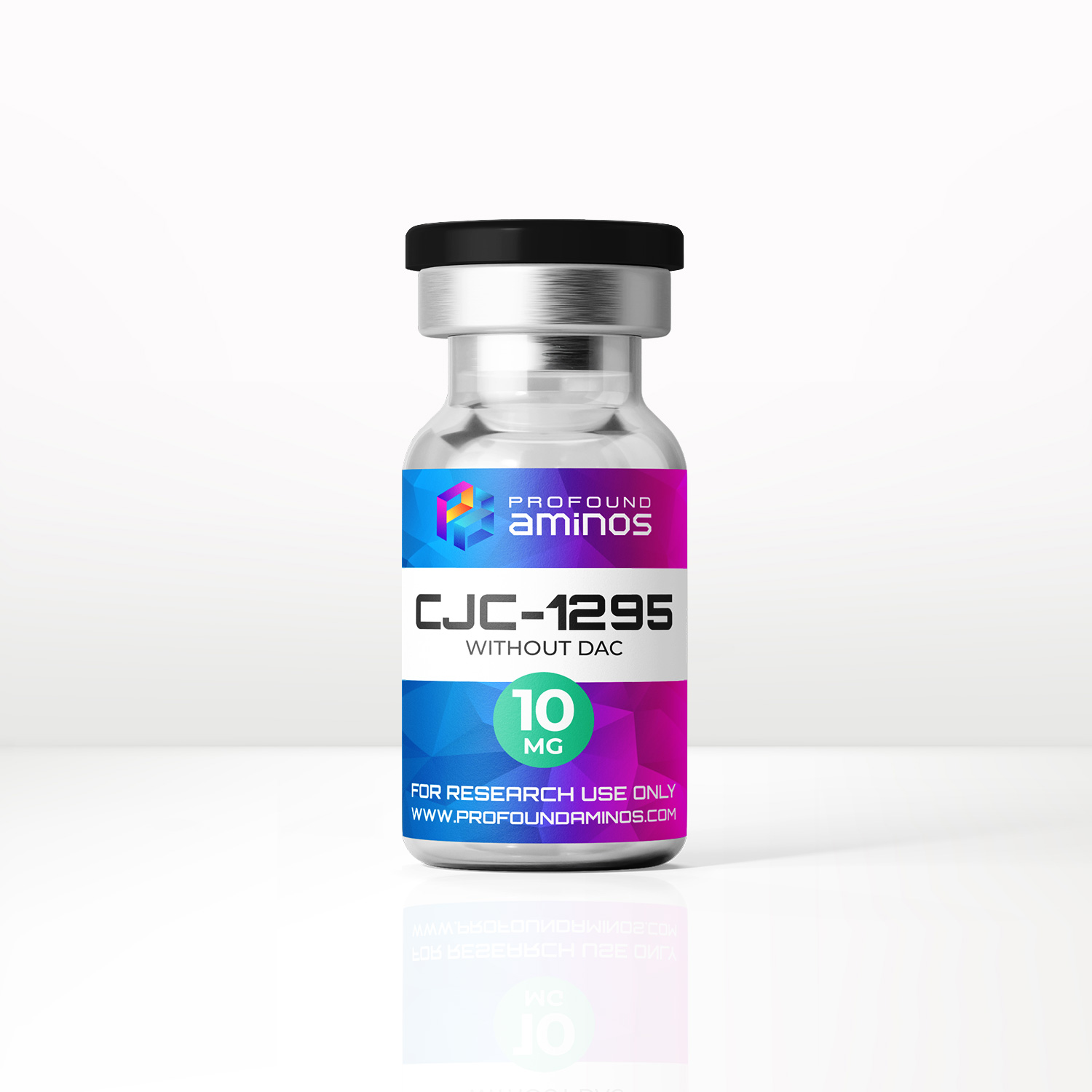

CJC-1295 without DAC
Price range: $54.00 through $76.00
This is a 29-amino acid synthetic GHRH analogue research reagent — formally designated Modified GRF (1-29) and also known as CJC-1295 Without DAC — engineered for laboratory investigation of pulsatile growth hormone axis signalling, hypothalamic-pituitary feedback dynamics, and somatotroph receptor pharmacology.
🔥 Exclusive Crypto Offer
Get an INSTANT 15% DISCOUNT when you pay with Bitcoin, Ethereum, Dogecoin, Bitcoin Cash, XRP, Solana, or USDT.
⚡ Don't have crypto? Buy it here in 5 minutes with easy guidance.
💡 Pro Tip: You can also pay with cryptocurrency using your verified Cash App or PayPal account for a fast and secure checkout!
CJC-1295 Without DAC
Modified GRF (1-29) | GHRH Analogue Research Reagent
29-Amino Acid | MW 3,367.9 g/mol | PubChem CID 91976842 | Four Stabilising Substitutions | Lyophilized | COA Per Batch | RUO
FOR RESEARCH USE ONLY. Not intended for consumption, parenteral administration, therapeutic, or diagnostic application of any kind. For laboratory and preclinical research exclusively.
TECHNICAL SPECIFICATIONS
| Property | Data |
|---|---|
| Product Reference | CJC-1295 Without DAC | Modified GRF (1-29) Research Reagent |
| Also Known As | Mod GRF 1-29 | Modified Growth Releasing Factor (1-29) | GHRH(1-29) Tetrasubstituted Analogue |
| Chemical Class | Synthetic Peptide — GHRH Receptor Agonist Research Reagent |
| PubChem CID | 91976842 |
| Molecular Formula | C152H252N44O42 |
| Molecular Weight | 3,367.9 g/mol (approximate) |
| Sequence Length | 29 amino acids |
| Substitution Sites | Positions 2, 8, 15, 27 — tetrasubstituted DPP-IV resistant scaffold |
| Half-Life (Research Model) | ~30 minutes | Short-acting pulsatile profile |
| Physical Format | Lyophilized Powder — Hermetically Sealed Sterile Container |
| Analytical Purity | ≥99% (RP-HPLC verified) |
| Identity Confirmation | LC-MS — molecular weight and sequence verified per batch |
| Endotoxin Screening | <0.25 EU/mg (LAL method) |
| Reconstitution Buffer | Sterile aqueous laboratory buffer (bacteriostatic-grade) |
| Storage — Lyophilized | 2–8°C, desiccated, light-protected |
| Storage — Reconstituted | -20°C, single-use aliquots; protect from repeated freeze-thaw |
| Regulatory Class | Research Use Only (RUO) — Not for administration to living organisms |
| COA Availability | Per-batch COA downloadable from Profound Aminos COA portal |
Disclaimer : For Research Use Only (RUO). Not for human use.
Product Overview
CJC-1295 Without DAC (Modified GRF 1-29) is a tetrasubstituted synthetic analogue of endogenous human growth hormone-releasing hormone (GHRH), a 44-amino acid hypothalamic neuropeptide that physiologically governs pituitary somatotroph activation and downstream GH-IGF-1 axis regulation. The reagent’s 29-amino acid truncated sequence corresponds to the bioactive N-terminal fragment of GHRH, retaining full GHRH receptor (GHRHR) binding competence. Theratechnologies Inc. originally developed this scaffold in the early 2000s as a stabilised GHRH analogue platform. The no-DAC variant — without the maleimidopropionic acid (MPA) albumin-binding conjugate — produces pulsatile receptor stimulation that more closely recapitulates endogenous hypothalamic GHRH secretion rhythms in preclinical models.
The absence of the Drug Affinity Complex is a defining research feature, not a limitation. In experimental designs where the primary endpoint is investigation of discrete GH pulse architecture, somatostatin interplay, or circadian GH axis rhythmicity, the short half-life of the no-DAC form is precisely what ensures physiologically relevant pulse-to-pulse resolution in the data. This makes CJC-1295 Without DAC the preferred GHRH analogue reagent for studies pairing it with growth hormone secretagogue receptor (GHSR) agonist compounds, where synergistic dual-pathway somatotroph activation is the target endpoint.
MOLECULAR STRUCTURE

CJC-1295 Without DAC (Modified GRF 1-29) — PubChem CID 91976842
CJC-1295 Without DAC is a 29-amino acid synthetic peptide with molecular formula C152H252N44O42 and molecular weight 3,367.9 g/mol (PubChem CID 91976842). It is the tetrasubstituted N-terminal fragment of human GHRH, modified at four residue positions to resist enzymatic degradation: D-Ala replaces L-Ala at position 2 to block DPP-IV cleavage; Gln or Aib replaces Gly at position 8 to prevent asparagine rearrangement; modified Ala at position 15 enhances receptor binding bioactivity; and Leu replaces Met at position 27 to prevent methionine oxidation.
These modifications extend the functional
half-life from native GHRH’s approximately 7 minutes to approximately 30 minutes while preserving full GHRH receptor binding selectivity. The large topological polar surface area (~1,450 Å2) and high molecular weight are consistent with a flexible, biologically active peptide scaffold. PubChem computed properties confirm 52 hydrogen-bond donors, 48 acceptors, and 118 rotatable bonds.
Four Stabilising Amino Acid Substitutions
| Position | Native GHRH Residue | Modified GRF Residue | Research Rationale |
|---|---|---|---|
| 2 | L-Ala | D-Ala | Blocks DPP-IV enzymatic cleavage at the Tyr-Ala N-terminal bond |
| 8 | Gly | Aib / Gln | Prevents Asn deamidation and amide hydrolysis to Asp; enhances metabolic stability |
| 15 | Ala | Ala (modified) | Enhances GHRHR binding bioactivity and receptor engagement kinetics |
| 27 | Met / Ser | Leu | Prevents methionine oxidation during lyophilisation, shipping, and storage |
RESEARCH MECHANISM -2026 LABORATORY APPLICATIONS
In 2026-era GH-axis and neuroendocrine research, this reagent is utilised to investigate the following mechanistic pathways:
- GHRHR-cAMP-PKA Somatotroph Signalling Cascade
Investigating how CJC-1295 Without DAC binds selectively to GHRH receptors on anterior pituitary somatotroph cells, activating membrane-bound adenylate cyclase, elevating intracellular cAMP, and engaging protein kinase A (PKA) to drive GH gene transcription and pulsatile GH secretory vesicle exocytosis. Research applications include receptor binding kinetics assays, cAMP quantification in somatotroph cell lines (GH3, HP75), and downstream PKA substrate phosphorylation profiling. - Pulsatile GH Axis Dynamics & Somatostatin Counterregulation
Studying the temporal interplay between GHRH-mediated somatotroph activation and hypothalamic somatostatin (SRIF) inhibitory tone. Because the no-DAC variant clears within approximately 30 minutes, it enables researchers to model discrete GH secretory episodes that mirror endogenous ultradian GH rhythm. Research applications include in vitro GH pulse amplitude quantification,
SRIF pathway interaction studies, and circadian GH axis timing investigations in rodent models. - GH-IGF-1 Axis Modulation & Hepatic IGF-1 Biosynthesis
Quantifying how pulsatile somatotroph GH release — stimulated by Modified GRF (1-29) in preclinical models — activates hepatic JAK2-STAT5 signalling cascades, driving insulin-like growth factor-1 (IGF-1) gene expression and secretion. Research endpoints include serum IGF-1 ELISA quantification, IGFBP-3 regulation studies, and GH receptor downregulation kinetics in hepatocyte
culture and rodent model systems. - DPP-IV Resistance & Peptide Stability Research
Investigating the mechanistic contribution of the four amino acid substitutions — particularly D-Ala at position 2 (blocking DPP-IV cleavage at the N-terminal Tyr-Ala dipeptide bond) and Gln at position 8 (preventing Asn deamidation/hydrolysis) — to the peptide’s enzymatic resistance profile. Research applications include in vitro DPP-IV degradation assays, plasma stability studies, and comparative half-life quantification versus native GHRH (1-29) and Sermorelin scaffolds. - Dual-Pathway GH Axis Research: GHRHR + GHS-R1a Synergy Models
Studying synergistic GH pulse amplification in research models that combine Modified GRF (1-29) — a GHRHR agonist engaging the cAMP/PKA pathway — with ghrelin receptor (GHS-R1a) agonist compounds engaging the phospholipase C/intracellular calcium pathway. This dual-receptor research architecture is based on published preclinical data (PMID: 10372741) demonstrating that simultaneous GHRHR and GHSR activation produces synergistic GH release exceeding either pathway alone. Research applications include dual-pathway receptor synergy quantification, somatotroph calcium mobilisation assays, and multi-compound
GH secretagogue interaction modelling. - Age-Related GH Axis Decline — Preclinical Model Research
Investigating somatotroph responsiveness to GHRH receptor stimulation in aged rodent models, where endogenous GHRH tone
and somatotroph reserve are reduced relative to young subjects. A 2025 publication in Growth Hormone and IGF Research
demonstrated approximately 40% greater IGF-1 elevation in aged rodent models when GHRH analogue administration was timed
to align with the early sleep-phase GH secretory window. Applications include age-stratified somatotroph secretory capacity assays
and hypothalamic-pituitary feedback sensitivity studies.
COMPARATIVE RESEARCH CONTEXT
2026 GHRH Analogue Landscape
| Feature | CJC-1295 Without DAC (Mod GRF 1-29) | CJC-1295 With DAC | Sermorelin (GRF 1-29) | Native GHRH (1-44) |
|---|---|---|---|---|
| Amino Acids | 29 | 29 + DAC conjugate | 29 | 44 |
| Substitutions | 4 (DPP-IV resistant) | 4 + MPA linker | 0 (native 1-29) | 0 (native) |
| Half-Life | ~30 min | ~6-8 days | ~7-11 min | ~7 min |
| GH Profile | Pulsatile — discrete | Tonic — sustained | Pulsatile — rapid | Pulsatile — rapid |
| DPP-IV Resistance | High | High | Low | None |
| Albumin Binding | No | Yes (MPA-mediated) | No | No |
| Pulsatile Research | Optimal | Limited (tonic) | Rapid washout | Rapid washout |
| Dual-Stack Research | Primary agent | Compatible | Compatible | Compatible |
| PubChem CID | 91976842 | N/A (conjugate) | Multiple | N/A |
WHY SOURCE FROM PROFOUND AMINOS
- Sequence-Confirmed Identity — Beyond Purity
Standard RP-HPLC purity testing confirms what fraction of a container is the target compound — it does not confirm which compound. CJC-1295 Without DAC is a 29-residue peptide that shares high structural similarity with related GHRH scaffolds including Sermorelin and CJC-1295 With DAC. Identity confirmation via LC-MS molecular weight verification and sequence profiling per batch is the only method that provides certainty that the correct substitution pattern is present. Profound Aminos performs both RP-HPLC purity verification and LC-MS identity confirmation before every batch release. - Lyophilized Format — Maximum Research Stability
Lyophilisation removes aqueous solvent under vacuum, leaving a dry, structurally intact peptide powder with dramatically extended shelf stability compared to reconstituted or liquid formats. For CJC-1295 Without DAC — a high-molecular-weight peptide with multiple asparagine residues sensitive to hydrolysis — lyophilisation is not a convenience feature; it is a data integrity requirement.
Batches reconstituted from a verified lyophilized starting material provide reproducible molar concentrations, improving R-squared values in GH axis quantification assays. - USA Domestic Cold-Chain Logistics
High-molecular-weight peptide reagents are thermally sensitive. International sourcing introduces uncontrolled temperature excursions during customs transit that can produce partial deamidation, aggregation, or oxidation artefacts at exactly the residue positions that the substitution chemistry was designed to protect. Profound Aminos ships exclusively within the USA via a monitored cold-chain protocol — from a climate-controlled facility directly to your research address. - Endotoxin-Screened per Batch
LPS endotoxin contamination is a known confound in cell-based GH axis research, capable of triggering non-specific immune activation that mimics or masks GHRH receptor-mediated somatotroph responses. Every batch undergoes endotoxin screening to <0.25 EU/mg via LAL chromogenic method, with results documented on the per-batch COA.
REGULATORY & COMPLIANCE STATEMENT (RUO)
| Classification Detail | Description |
|---|---|
| Regulatory Status | Research Use Only (RUO) — U.S. Federal Regulatory Framework |
| FDA Status (2026) | Not approved. Listed Category 2 (503A/503B, Sept 2023; confirmed April 2026). Immunogenicity risk identified. No reclassification as of May 2026. |
| Compounding Status | Category 2 — Compounding by licensed 503A/503B pharmacies for human use prohibited. |
| Not a Drug | Not evaluated by FDA for safety or efficacy in any application. |
| Not a Supplement | Not a dietary supplement, nutraceutical, or consumer product. |
| Chemical Reference | Supplied solely for laboratory testing and preclinical scientific investigation. |
| PPE Required | Gloves, lab coat, and protective eyewear during reconstitution and handling. |
| Applicable Regulation | 21 CFR 312.2(b)(1) — RUO framework governing uninvestigated research reagents. |
FOR RESEARCH USE ONLY. NOT FOR HUMAN OR ANIMAL APPLICATION.
STRICT PROHIBITION: Promoting, distributing, or using this research reagent for any application involving administration to living organisms is strictly prohibited and constitutes a violation of U.S. federal law.
“These statements have not been evaluated by the Food and Drug Administration. This product is not intended to diagnose, treat, cure, or prevent any disease.”
Frequently Asked Questions
Q1: Is CJC-1295 Without DAC intended for consumption or administration?
No. CJC-1295 Without DAC (Modified GRF 1-29) is strictly classified as a Research Use Only (RUO) reagent. It is not approved, labelled, or intended for consumption, parenteral administration, therapeutic use, or any diagnostic application. Purchase confirms agreement to institutional laboratory research use only.
Q2: What is the difference between CJC-1295 Without DAC and CJC-1295 With DAC?
Both are 29-amino acid GHRH analogues with the same four stabilising substitutions at positions 2, 8, 15, and 27. The DAC variant includes an MPA chemical conjugate that binds the peptide covalently to circulating serum albumin, extending its half-life to approximately 6-8 days and producing sustained, tonic GH elevation. CJC-1295 Without DAC lacks this albumin-binding conjugate entirely. Its half-life in research models is approximately 30 minutes, producing discrete, pulsatile GH release. These two variants are appropriate for fundamentally different research endpoints.
Q3: What does Modified GRF (1-29) mean?
GRF (1-29) refers to the first 29 amino acids of Growth Releasing Factor. ‘Modified’ signifies the four amino acid substitutions that distinguish it from the native GRF (1-29) sequence (Sermorelin). Modified GRF (1-29), Mod GRF (1-29), CJC-1295 Without DAC, and ModGRF(1-29) are all nomenclatures referring to the same tetrasubstituted peptide reagent (PubChem CID 91976842).
Q4: How is CJC-1295 Without DAC reconstituted for laboratory use?
Reconstitute in sterile bacteriostatic water or sterile PBS at the molar concentration required for the specific assay protocol.
Calculate target concentration using molecular weight 3,367.9 g/mol. Reconstitute by adding solvent slowly along the container wall using a gentle swirling motion. Aliquot immediately into single-use research volumes and store at -20°C. Avoid repeated freeze-thaw cycles.
Q5: What is the FDA regulatory status of CJC-1295 Without DAC?
CJC-1295 Without DAC is not approved by the FDA for any therapeutic indication. In September 2023, the FDA placed CJC-1295 into Category 2 of the 503A/503B bulk drug substances compounding lists, citing insufficient clinical safety data and reports of immunogenicity and cardiovascular adverse events. The FDA April 2026 bulletin continued to classify CJC-1295 as a bulk substance that may present significant safety risks. No reclassification had been published as of May 2026. Sold exclusively as an RUO research reagent under 21 CFR 312.2(b)(1).
Q6: Is there published research data on CJC-1295 Without DAC specifically?
Published human clinical data is primarily available for CJC-1295 With DAC. The landmark 2006 study by Ionescu and Frohman (PMID: 16682504) documented GH and IGF-1 elevation using the DAC-modified form. CJC-1295 Without DAC shares the same receptor-active sequence but lacks albumin-binding chemistry; its ~30-minute half-life is documented in preclinical pharmacokinetic analyses. A 2025 rodent study in Growth Hormone and IGF Research demonstrated approximately 40% greater IGF-1 axis response with sleep-phase aligned GHRH analogue administration. All findings are preclinical or limited-phase human data.
Q7: Do you provide a COA for every batch?
Yes. Every CJC-1295 Without DAC batch includes a Certificate of Analysis documenting: RP-HPLC purity (³99%), LC-MS identity confirmation, endotoxin screening (<0.25 EU/mg by LAL method), lot number, and manufacturing date. Available for download per batch from the Profound Aminos COA portal.
Q8: Can CJC-1295 Without DAC be used outside a controlled laboratory setting?
Absolutely not. Any non-laboratory use — including personal, consumer, or wellness applications — violates our Terms of Service and constitutes a violation of U.S. federal law. Refer to our full Terms & Conditions for compliance requirements.
KEY REFERENCES -PubMed / PubChem Verified
| # | Citation | Relevance |
|---|---|---|
| 1 | Ionescu M, Frohman LA. Pulsatile GH secretion persists during CJC-1295 stimulation. J Clin Endocrinol Metab 2006;91(12):4792-4797. PMID: 16682504 | Foundational CJC-1295 GHRH analogue human pharmacokinetics |
| 2 | Bowers CY et al. Synergistic release of GH by GHRH and GHRP. Endocrinology 1999;141:4554. PMID: 10372741 | GHRHR + GHS-R1a dual-pathway GH synergy — mechanistic basis |
| 3 | Alba M et al. Once-daily CJC-1295 normalises growth in GHRH knockout mouse. Am J Physiol Endocrinol Metab 2006;291:E1290. doi:10.1152/ajpendo.00201.2006 | Preclinical GHRH analogue GH axis restoration — rodent model |
| 4 | Raun K et al. Ipamorelin — the first selective GHRP. Eur J Endocrinol 1998;139:552-561. PMID: 9849822 | GHSR selectivity data — dual-pathway research context |
| 5 | PubChem CID 91976842 — CJC-1295 Without DAC. pubchem.ncbi.nlm.nih.gov/compound/91976842 | Molecular structure, formula, computed properties — authoritative chemical registry |
| 6 | FDA Bulk Drug Substances Category 2 List — CJC-1295. FDA.gov. September 2023; April 2026 update. | Compounding restrictions and safety risk classification — current regulatory status |
| 7 | Growth Hormone and IGF Research 2025 — Circadian timing of GHRH analogue in aged rodent models. ~40% greater IGF-1 response with sleep-phase aligned administration. | Age-related GH axis decline research — 2025 circadian timing data |
| 8 | Grand View Research — U.S. Peptide Therapeutics Market Outlook 2033. grandviewresearch.com (2026). | US peptide therapeutics market CAGR ~10%, projected $186.3B by 2033 |
| 9 | LegitScript — Cross-Platform Peptide Advertising Dataset 2020-2025. December 2025. | Google Ads enforcement landscape for peptide research chemicals — compliance context |
RESEARCH USE ONLY — NOT FOR HUMAN USE — NOT FOR ANIMAL USE
| Weight | N/A |
|---|---|
| Dimensions | N/A |
| Strength |
10mg, 5mg |
DISCLAIMER:
- Products sold on our website are meant for scientific research purposes only, designed for in vitro testing and lab experimentation exclusively. These products are not intended to be used as foods, drugs or cosmetics, any sort of bodily introduction of the products into humans or animals is strictly prohibited. They must also not be misbranded, misused, or mislabeled, or used for anything other than research and scientific investigation.
- All the products you see on the website are being sold in a lyophilized powder state (freeze-dried), in a sealed sterile vial; and should be reconstituted.
The product’s label clearly states the amount of product a vial contains; some products are offered in different variations. - The products we are selling come in a sealed vial but require additional lab equipment for proper testing.
- Though we make sure packaging, label, seals and writing does not differ from the product photos you see on our website, there is a chance for a minimal deviation.
Related products

Research Compounds

Research Compounds

Research Compounds

Research Compounds

Research Compounds


Research Compounds
Research Compounds

Research Compounds